Konark Sun Temple Logo
English| EUR
Book Now
Open today · 06:00 – 20:00

Konark Sun Temple Tickets

Konark Sun Temple Tickets — Reserved Entry & Guided Walks

Stone wheels turn with the light, sandstone holds the sun.

4.8 /5 · 2,400 reviews
212K+ travelers chose this
Free Cancellation
Right now: Moderate — mid-week July footfall Coastal humidity is high this week; carry water and a hat for the open courtyard
2-3 hours recommended
1 Languages
Up to 25 people
Free Cancellation
Free cancellation Instant confirmation Mobile voucher Verified partner Skip-the-line
24
stone wheels
Chariot's carved wheels
7
horses pulling chariot
Symbolic sun-chariot team
13th c.
century built
Constructed c. 1250 CE
1984
UNESCO listing year
World Heritage status granted
~3 m
wheel diameter
Each wheel doubles as sundial
Choose your ticket

Konark Sun Temple tickets at a glance

Compare fares, pick the fit — all bookings are mobile-voucher and eligible for free cancellation where shown.

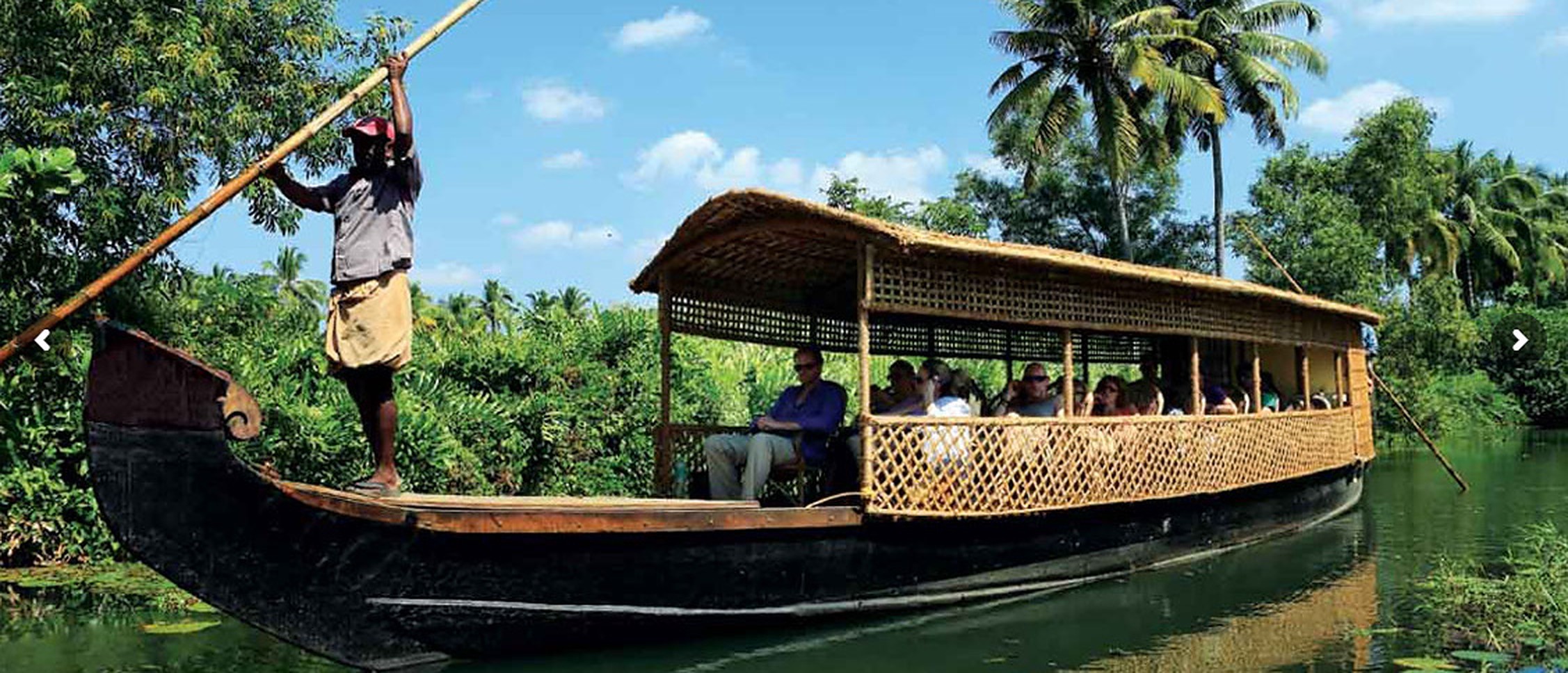
Cochin Backwater Village Eco Boat Cruise with Lunch 6 hr
Guided Experience

Cochin Backwater Village Eco Boat Cruise with Lunch

4.8 (576)
€29
  • Expert local guide
  • Small group
  • Skip-the-line access
  • Free cancellation
Book this ticket
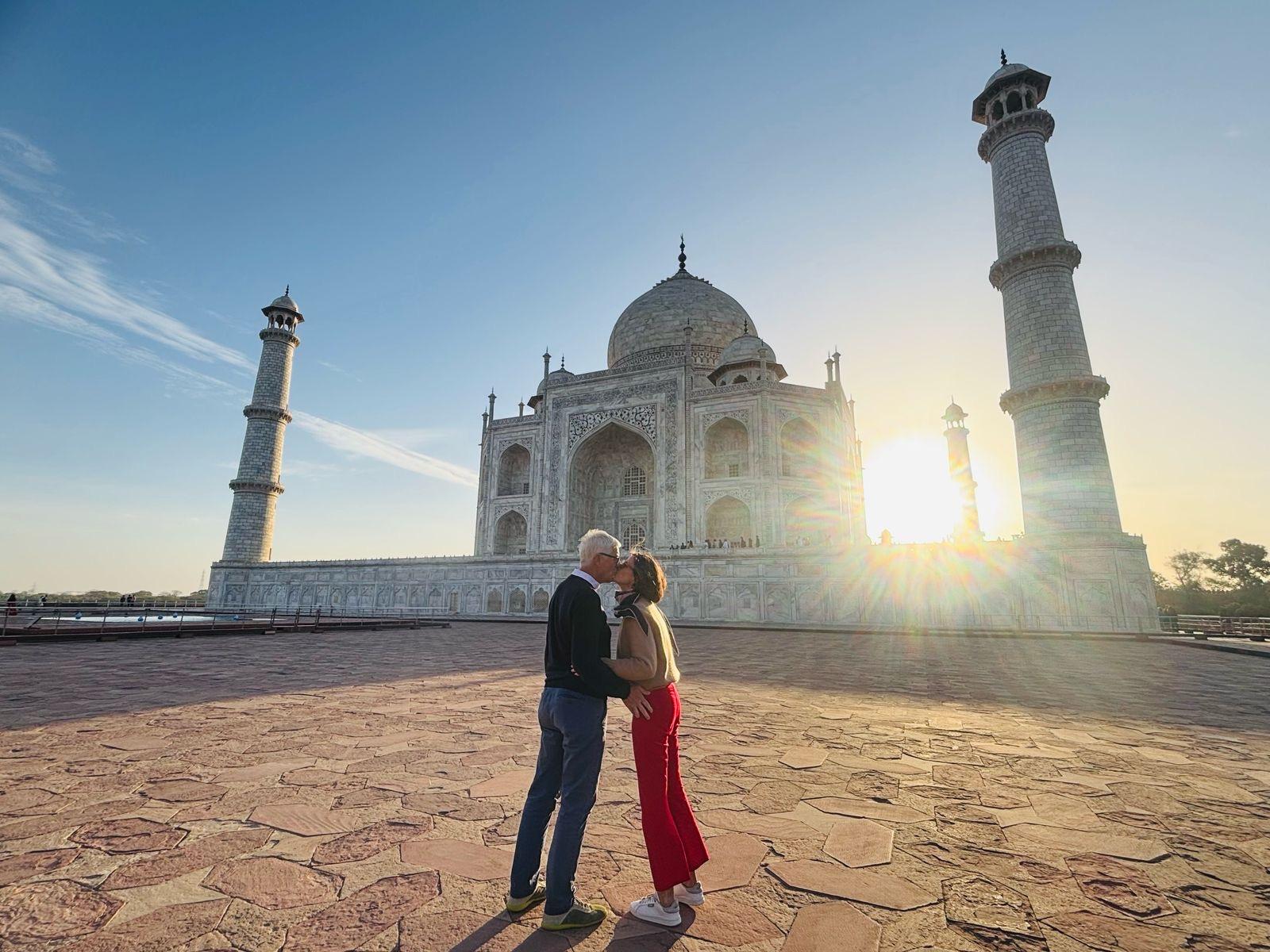
Taj Mahal Sunrise Private Tour from Delhi 11 hr
Luxury / Private

Taj Mahal Sunrise Private Tour from Delhi

4.9 (479)
€4
  • Private experience
  • Personal attention
  • Premium amenities
  • Free cancellation
Book this ticket
Compare options

Compare Konark Sun Temple ticket options

Experience DurationRatingTransfersPickupSkip-the-lineFree cancel. Price
Standard Entry
Most popular
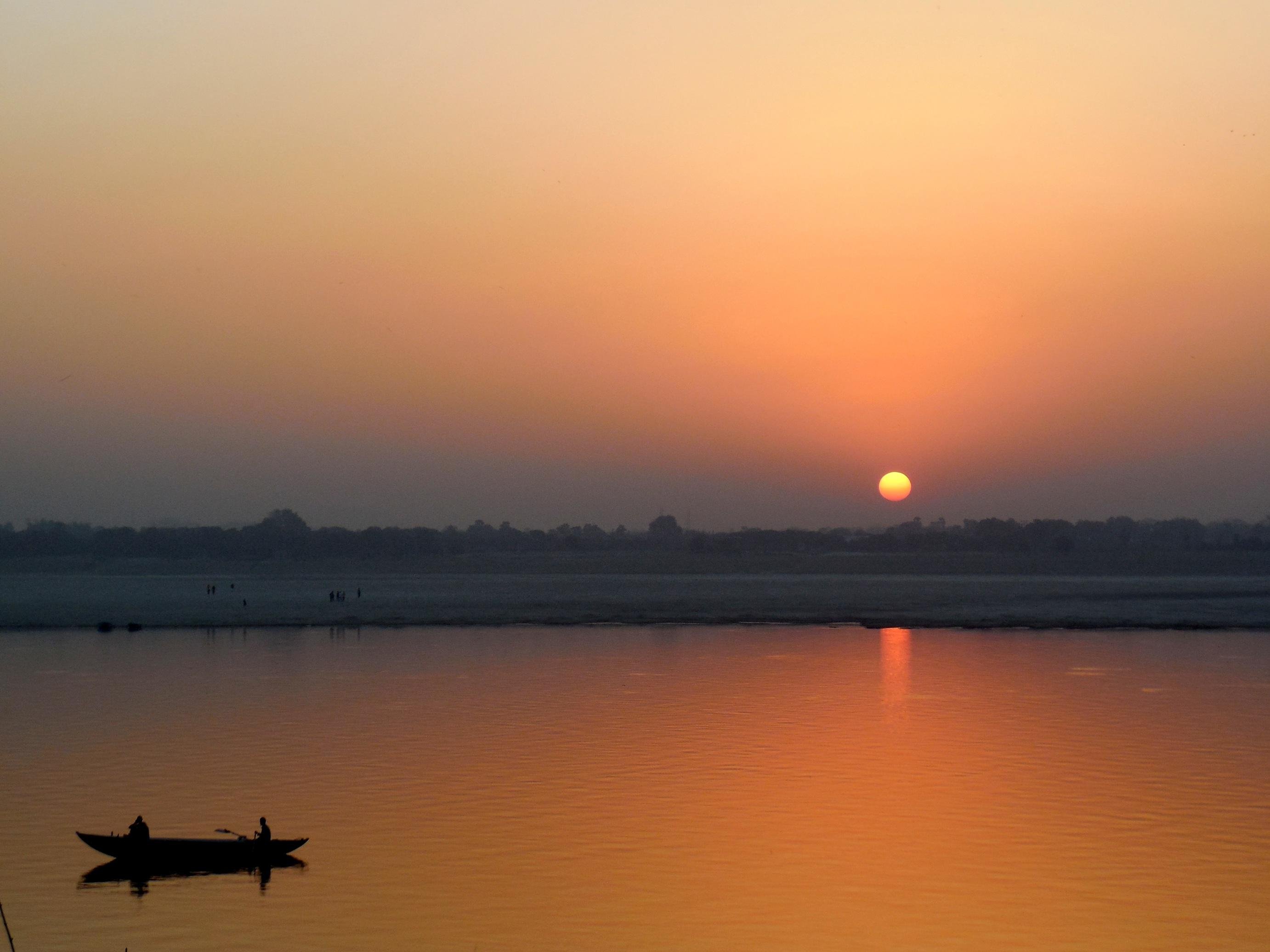
Varanasi Sunrise Boat Tour with Arti Ceremony
3 hr★ 4.9 €26 Book →
Guided Experience
Cochin Backwater Village Eco Boat Cruise with Lunch
6 hr★ 4.8 €29 Book →
Luxury / Private
Taj Mahal Sunrise Private Tour from Delhi
11 hr★ 4.9 €4 Book →

Are Konark Sun Temple Tickets Worth the Price?

Worth it for anyone who values sculpture

At 600 INR, Konark Sun Temple Tickets sit at the top of the ASI foreign-adult band, and the honest question is whether a roofless ruin justifies that. It does, on density. What survives — the jagatmohana, the 24 carved chariot wheels, the horses, the tiered erotic and courtly friezes running the full plinth — is one of the richest concentrations of Kalinga stonework anywhere, and this UNESCO World Heritage site rewards slow looking rather than a lap. The main deul collapsed, so there is no garbhagriha to enter and no living worship inside; if you measure value by intact temples and active ritual, Puri's Jagannath complex is the better spend. If you came for carving, iconography, or Odisha landmarks generally, few Konark Sun Temple Tickets tours in the state return this much per rupee. Indian nationals pay far less, which changes the calculus entirely.

What makes it worth it

  • UNESCO status with exceptional carving density
  • 24 chariot wheels survive in fine detail
  • Full plinth friezes reward close inspection
  • Compact site, no wasted walking between structures
  • Sculptural quality unmatched among Odisha landmarks

Keep in mind

  • Main tower collapsed; no sanctum to enter
  • No active worship or living ritual inside
  • Steep for foreign visitors versus Indian rates
  • Little shade; midday heat is punishing

Bottom line: Buy the Konark Sun Temple Tickets tickets if stone carving moves you; skip the Konark Sun Temple Tickets tour if you wanted a working temple.

Featured Experiences

Popular Konark Sun Temple tours & activities

Hand-picked experiences loved by thousands of travelers

Recommended Experience

Powered by GetYourGuide

Another traveler favorite

Powered by GetYourGuide
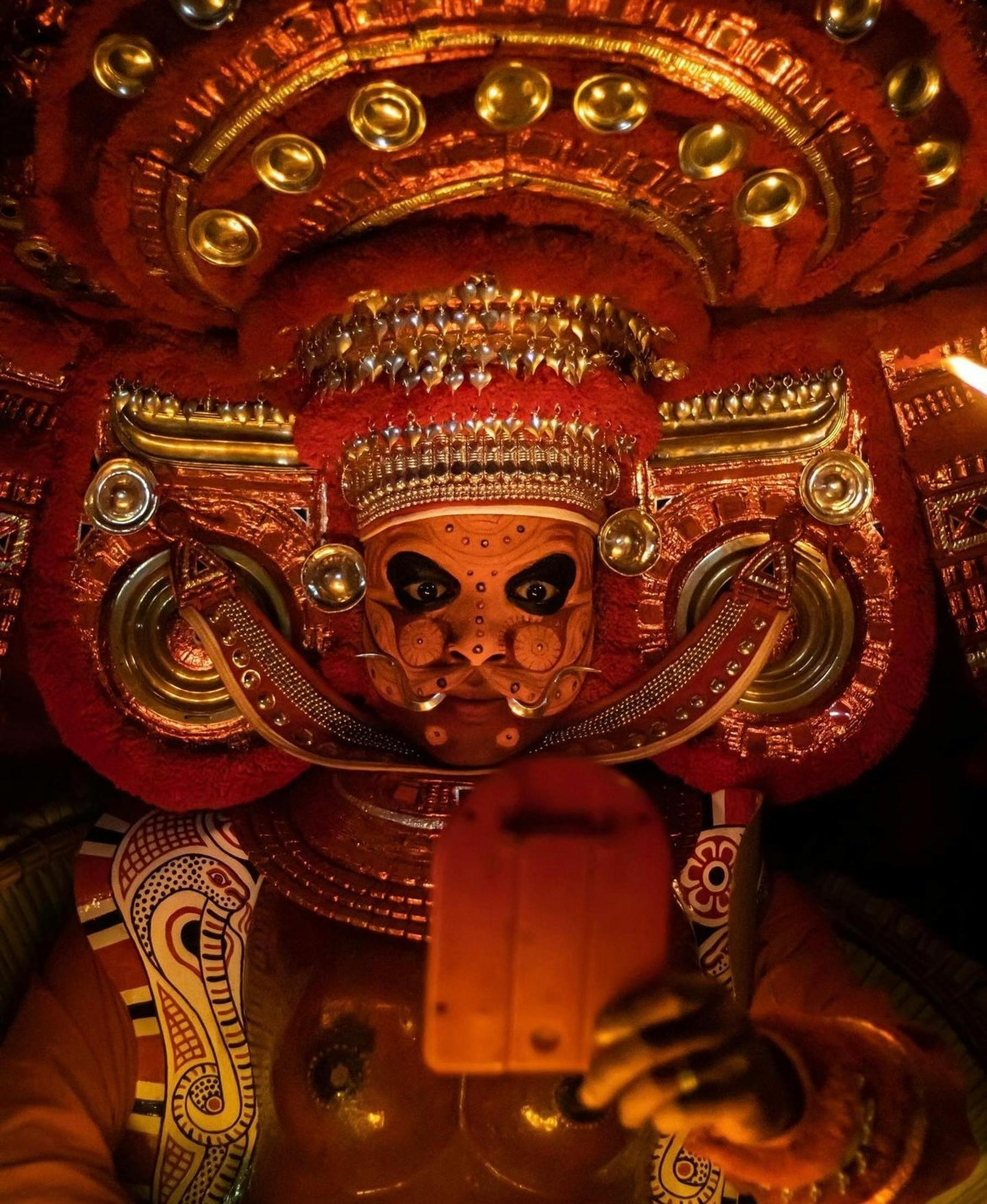
Kochi Evening: Kathakali, Theyyam & Kalaripayattu Show 3 hours (show), 1-7 hours total with transfers Free Cancellation

Kochi Evening: Kathakali, Theyyam & Kalaripayattu Show

A 3-hour cultural showcase of Kerala's iconic art forms with hotel transfers included.

4.7 (113)
FromFrom €9.08
See details
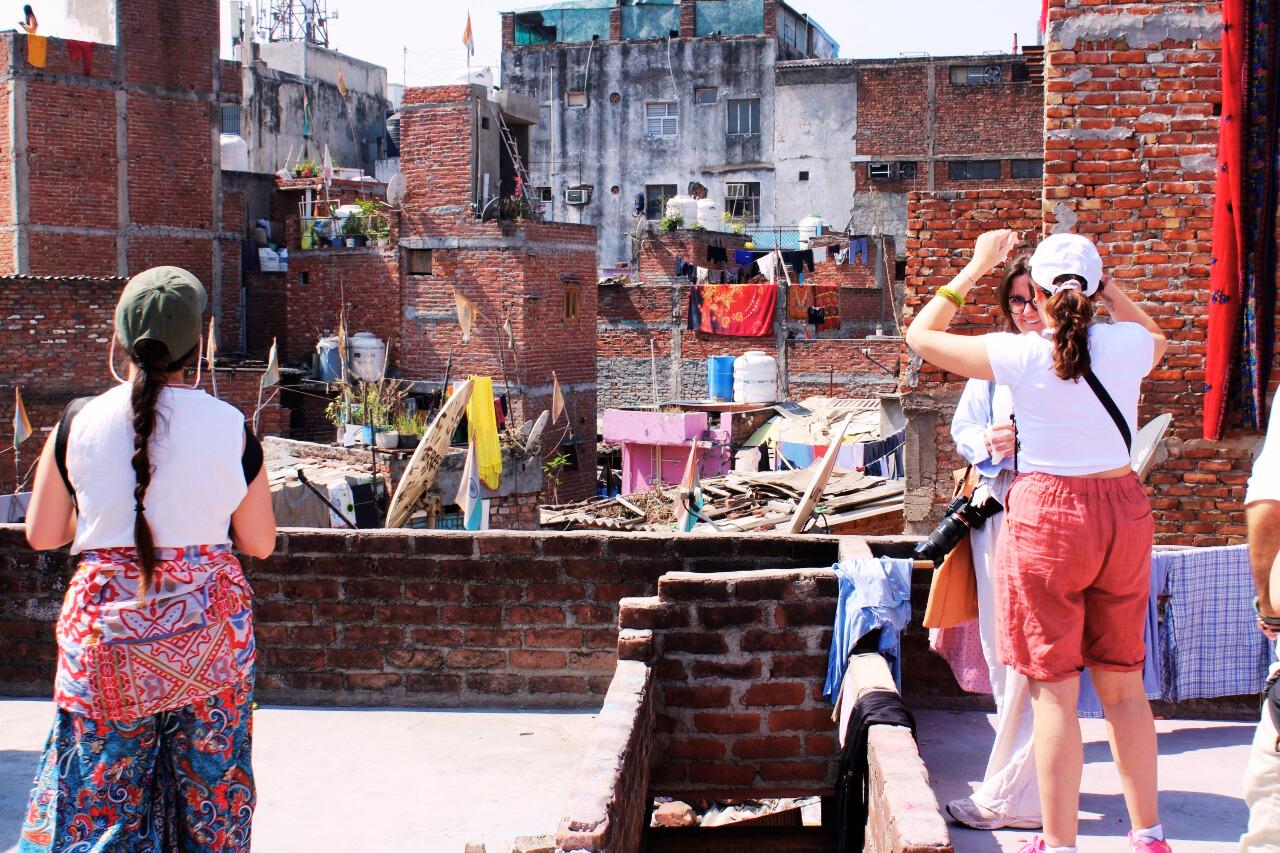
Sanjay Colony Slum Walking Tour with Local Guide 1.5 - 2 hours Free Cancellation

Sanjay Colony Slum Walking Tour with Local Guide

Walk through Delhi's Sanjay Colony with a local guide and see daily life, industry, and community up close.

5 (132)
FromFrom €8.98
See details
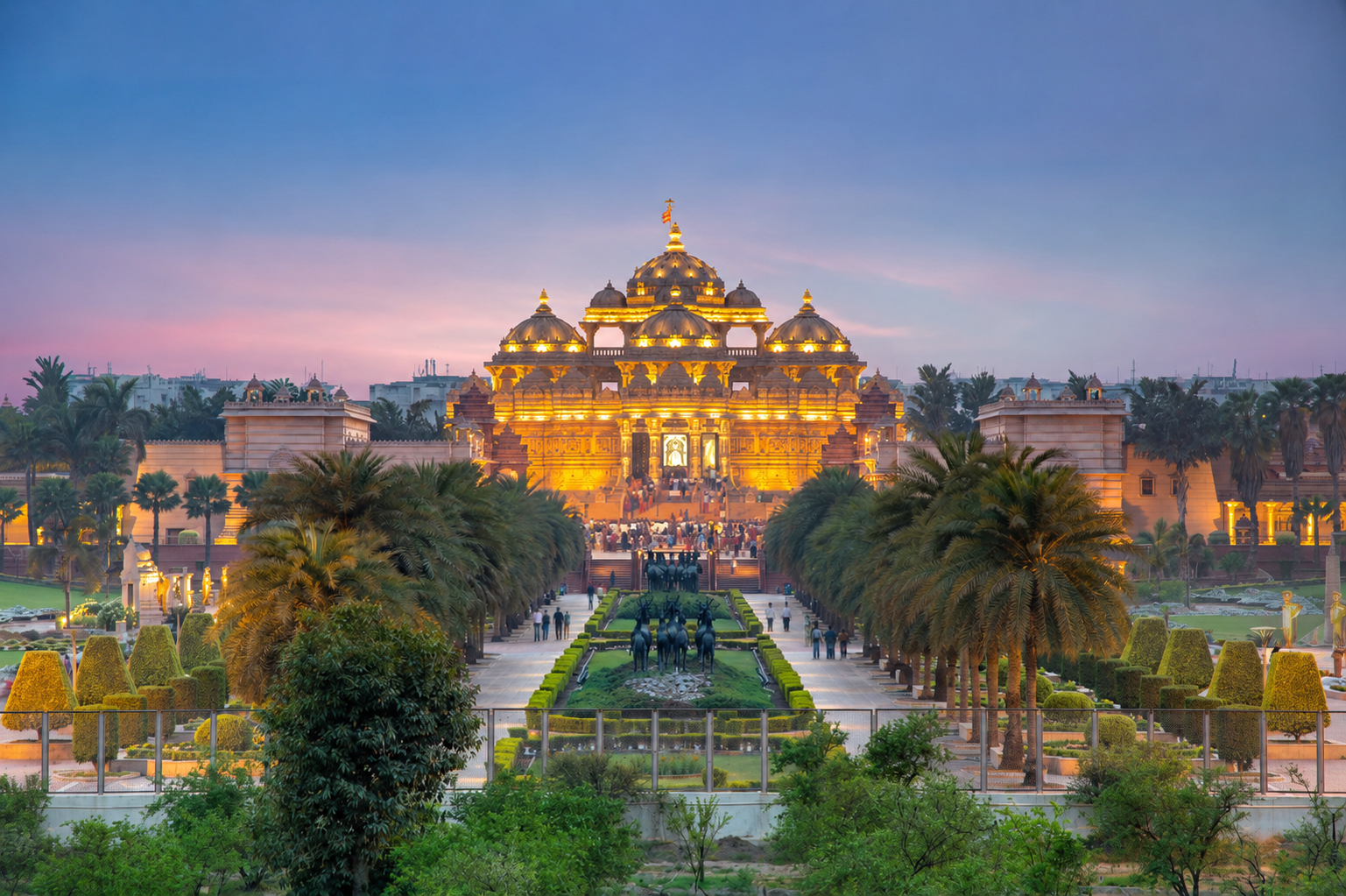
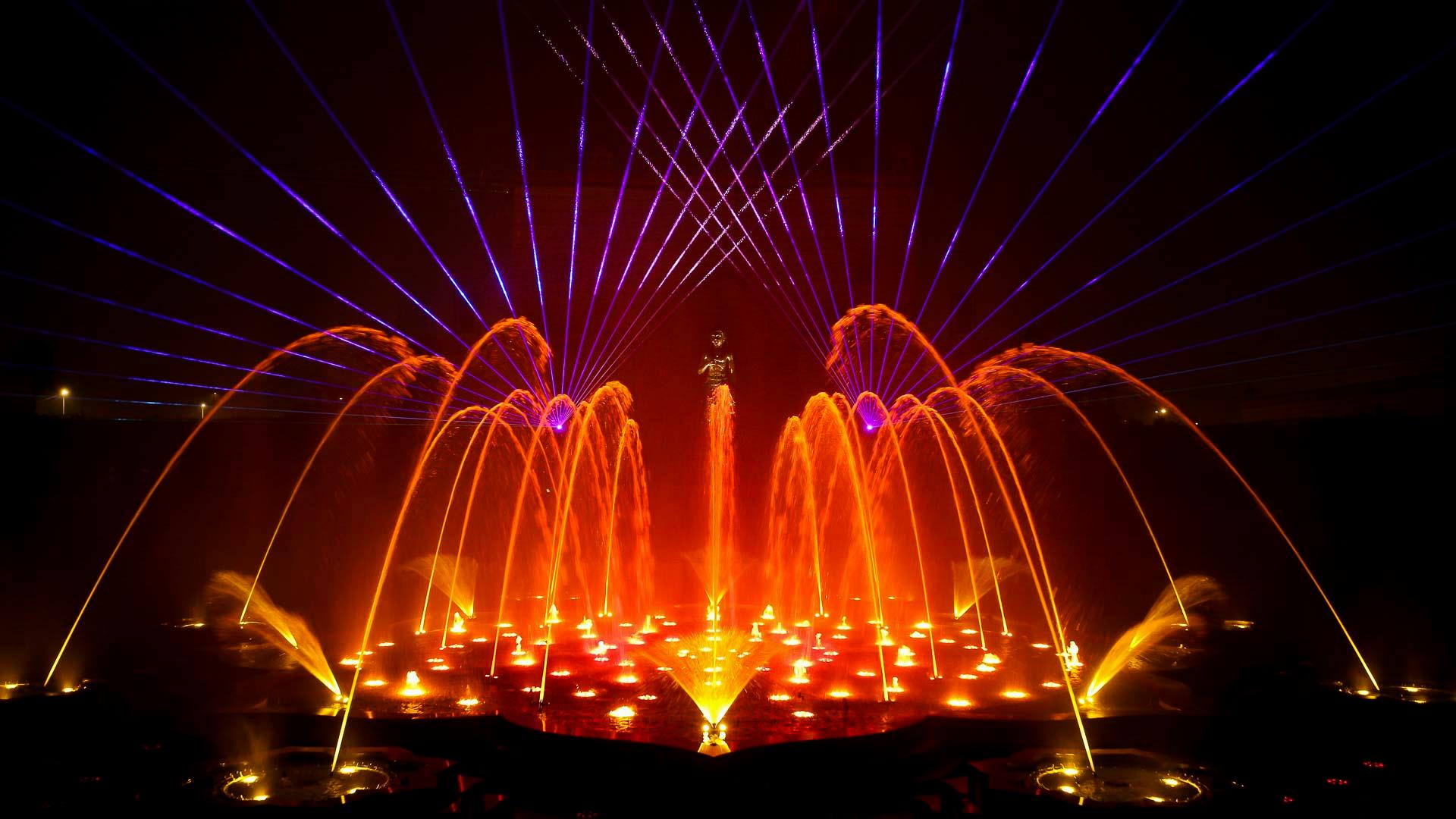
Delhi: Akshardham Temple Guided Tour with Light & Water Show 4 - 4.5 hours Free Cancellation

Delhi: Akshardham Temple Guided Tour with Light & Water Show

Private guided visit to the world's largest Hindu temple complex, capped with a mesmerizing evening water show.

4.9 (106)
FromFrom €19.52
See details
Golden Triangle Tour with Ranthambore Tiger Safari, 6 Days from Delhi 6 days / 5 nights Free Cancellation

Golden Triangle Tour with Ranthambore Tiger Safari, 6 Days from Delhi

Delhi, Agra & Jaipur with a Ranthambore tiger safari — private guide, driver & 5 nights' stay.

4.9 (87)
FromFrom €276.61
See details
Delhi: Akshardham Temple & Light Show, Customizable Private Tour 3 - 5 hours Free Cancellation

Delhi: Akshardham Temple & Light Show, Customizable Private Tour

Private Akshardham temple visit and evening light-and-water show, with optional cultural add-ons.

4.8 (135)
FromFrom €9.02
See details
Your journey

Your Konark Sun Temple day, step by step

1
Entrance and security check

Entrance and security check

Ticket verification and bag screening at the main gate before entering the courtyard.

2
Main courtyard and Gajasimha statues

Main courtyard and Gajasimha statues

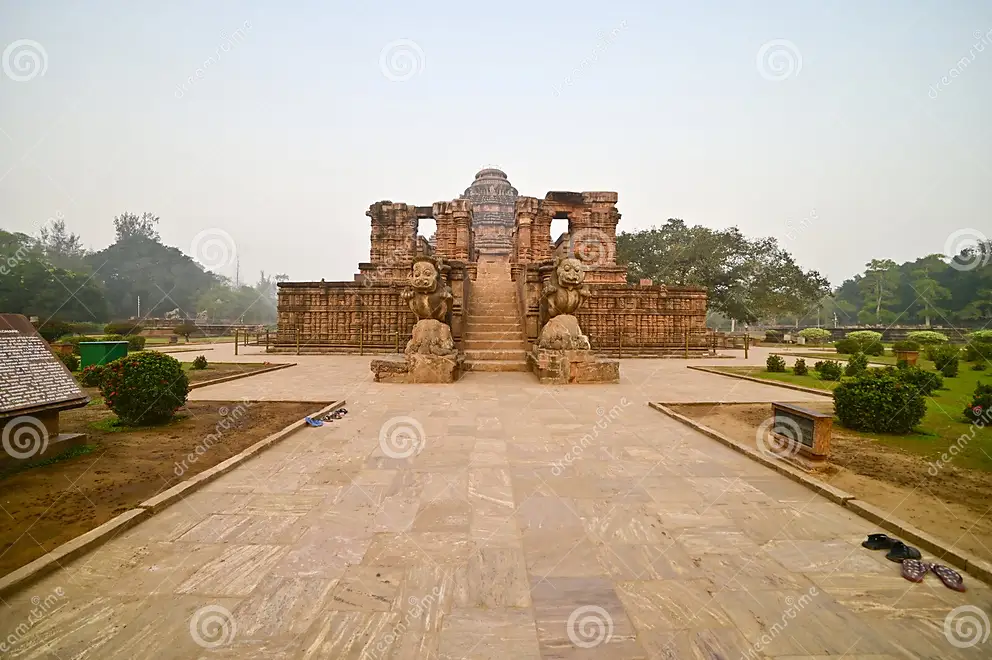
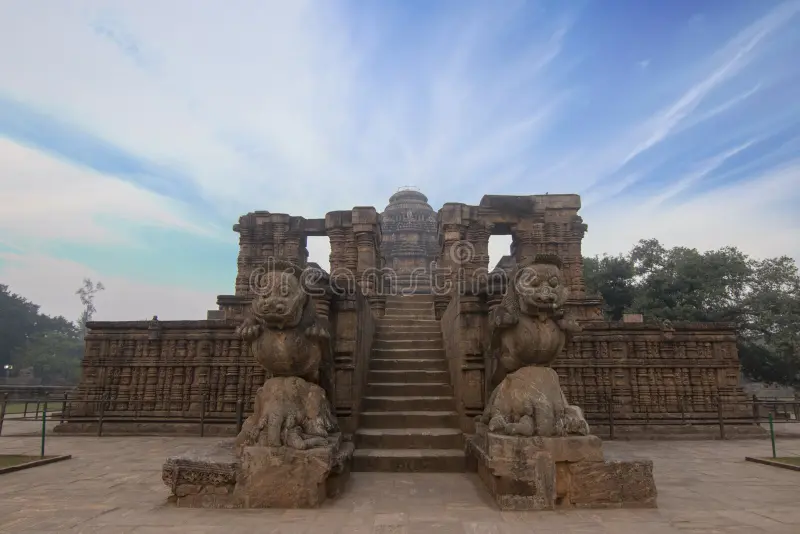
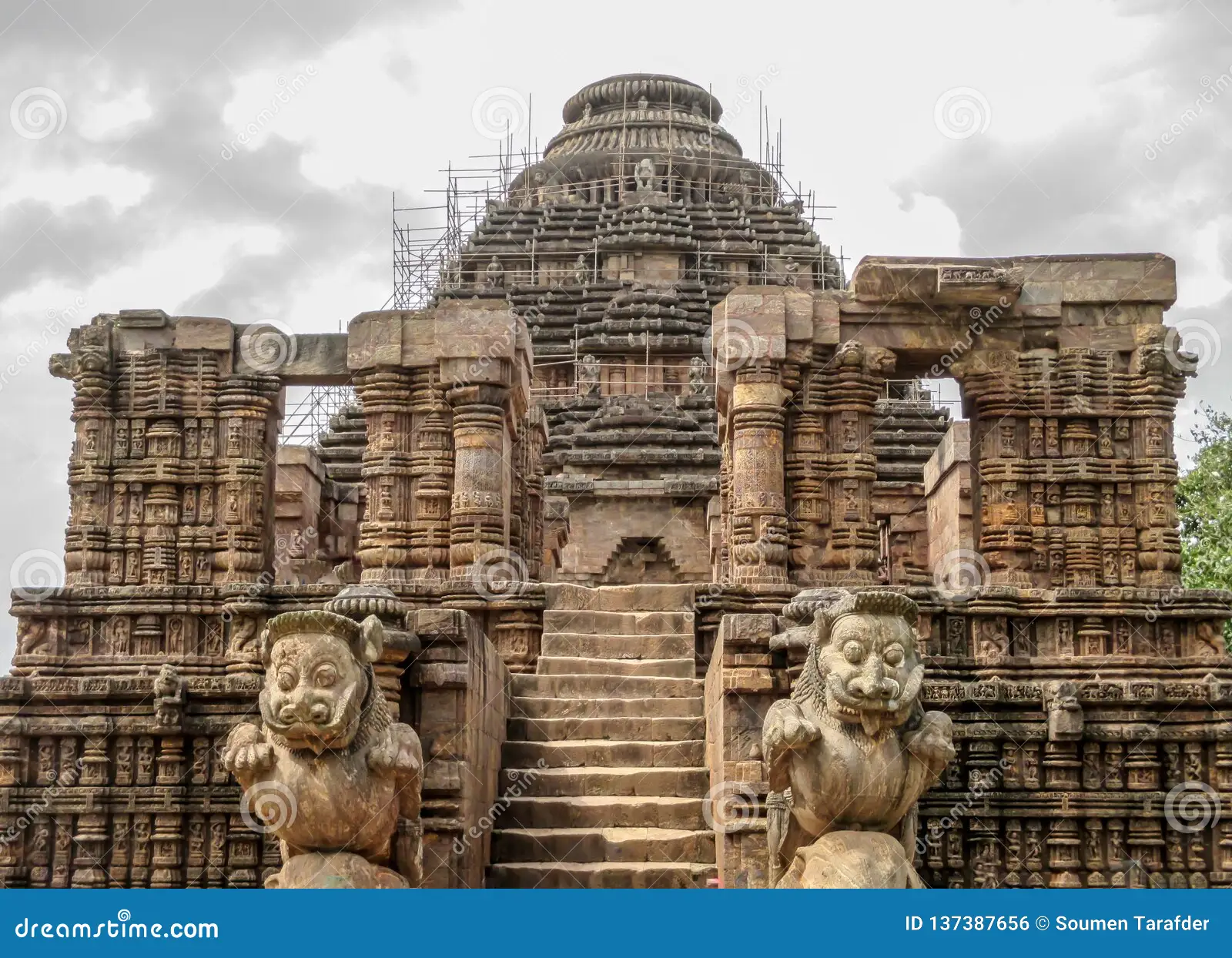
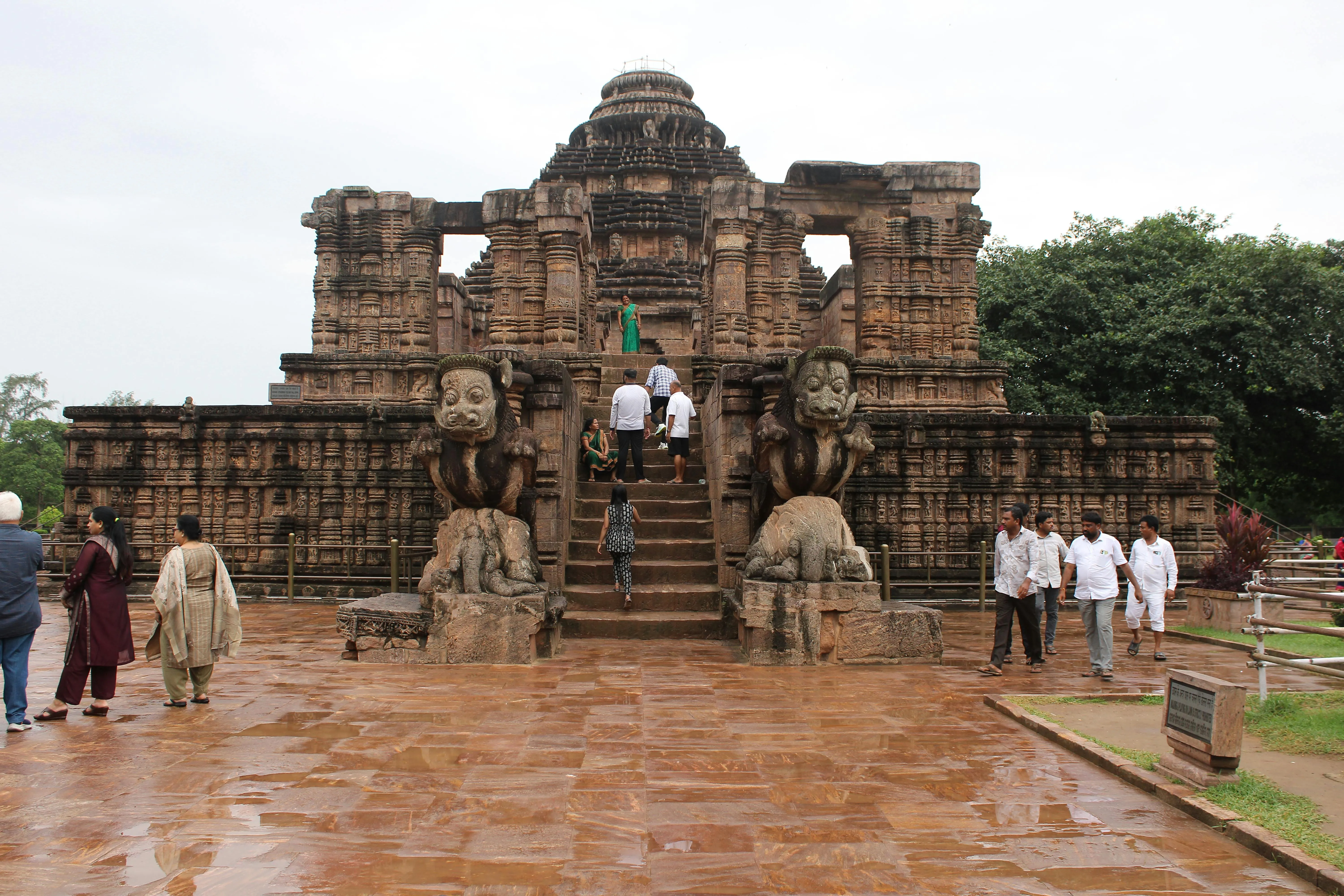
View the paired lion-and-elephant sculptures flanking the eastern staircase leading toward the Jagamohana.

3
Jagamohana platform and carved wheels

Jagamohana platform and carved wheels

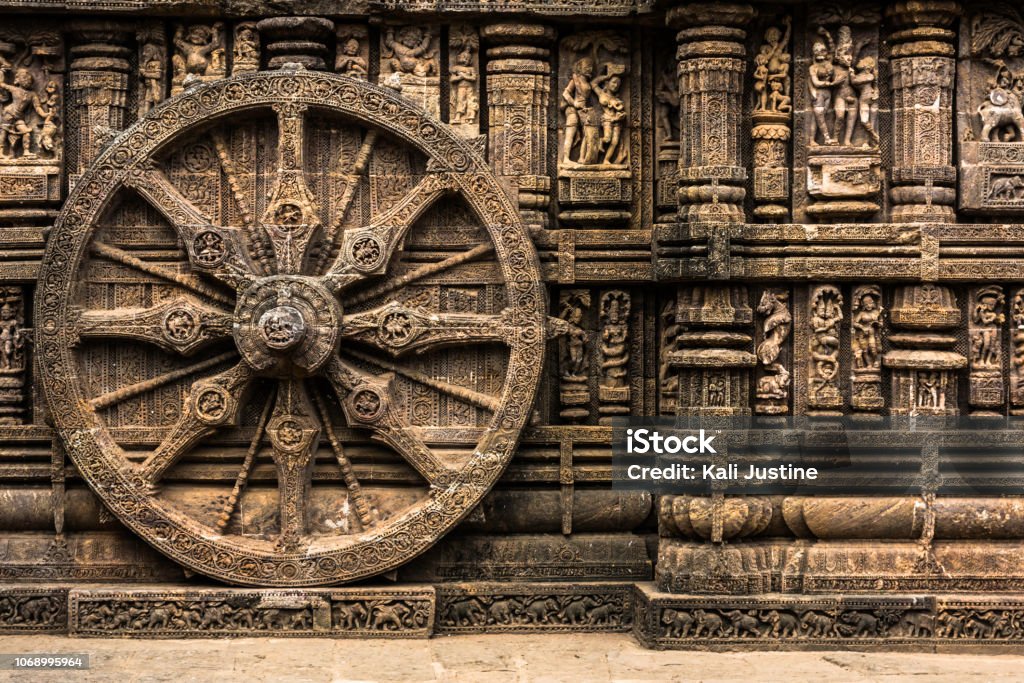
Walk the base of the audience hall to see the 24 stone wheels and the seven-horse chariot motif up close.

4
Nata Mandir dance hall

Nata Mandir dance hall

Explore the detached dance pavilion with pillars carved with musicians and dancers.

5
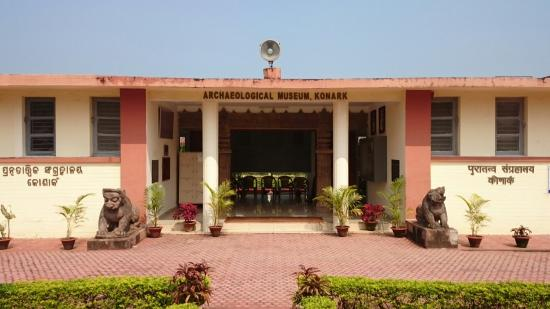
ASI Archaeological Museum

ASI Archaeological Museum

Visit the nearby museum housing sculptures recovered during 20th-century excavation of the site.

What you'll see

What you'll see at Konark Sun Temple

Jagamohana Audience Hall

Jagamohana Audience Hall

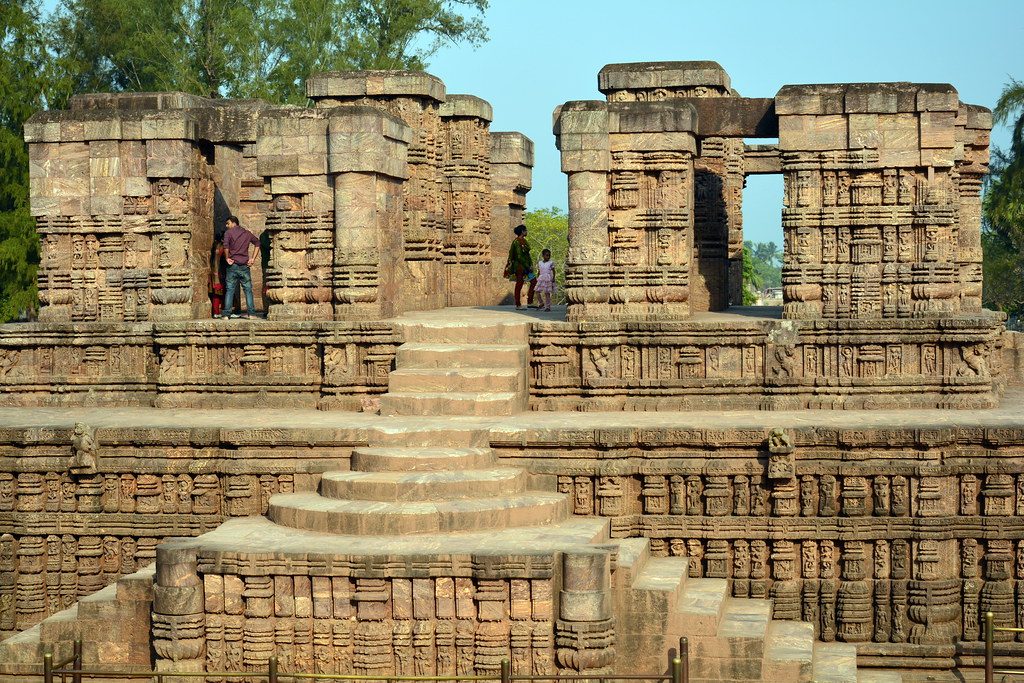
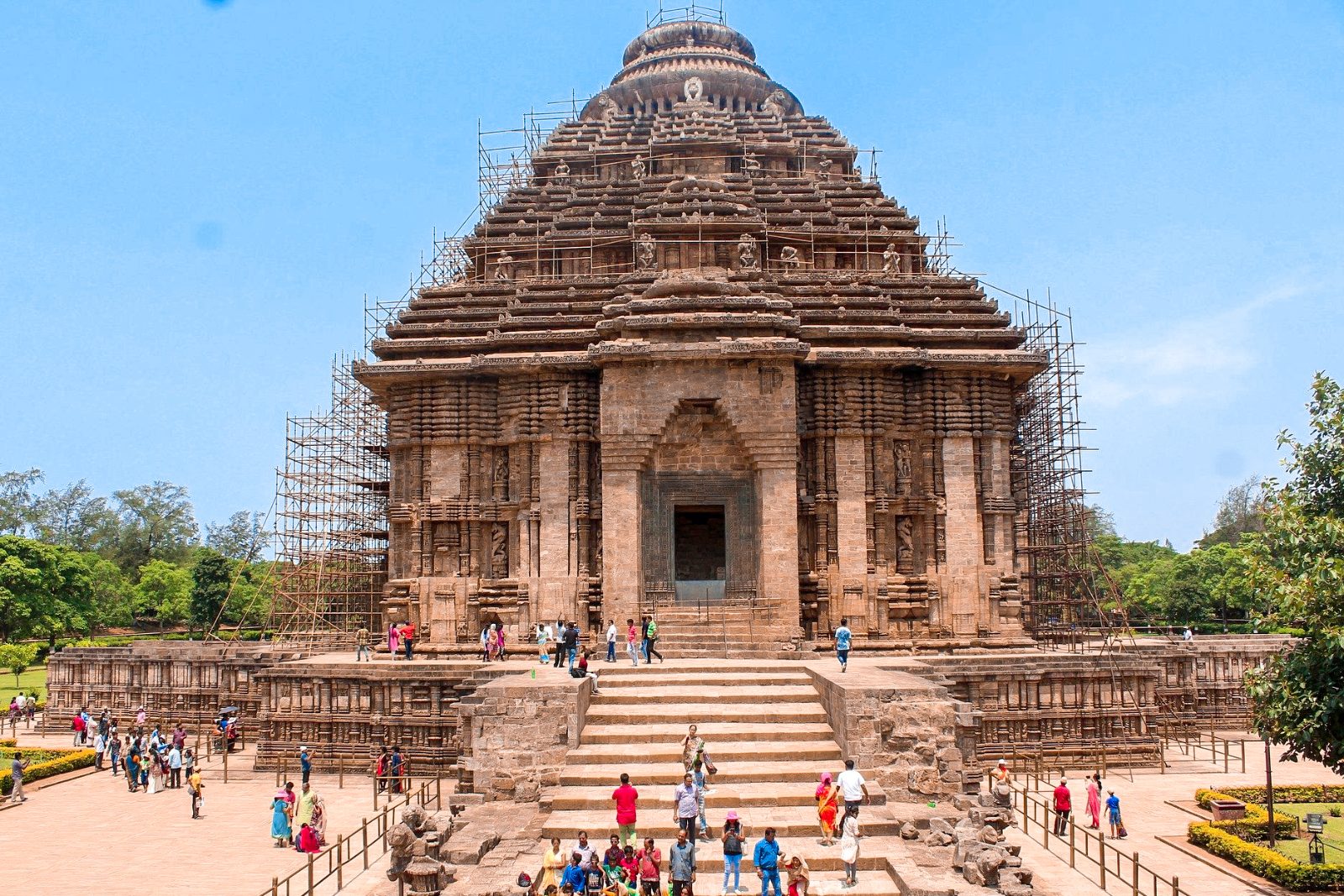
The surviving porch structure rises roughly 39 meters and forms the visual core of the ruined chariot design, since the temple's original sanctum tower is believed to have collapsed centuries ago. Visitors view the platform's carved base from ground level, as interior access has long been closed for structural safety.

Twenty-Four Carved Wheels

Twenty-Four Carved Wheels

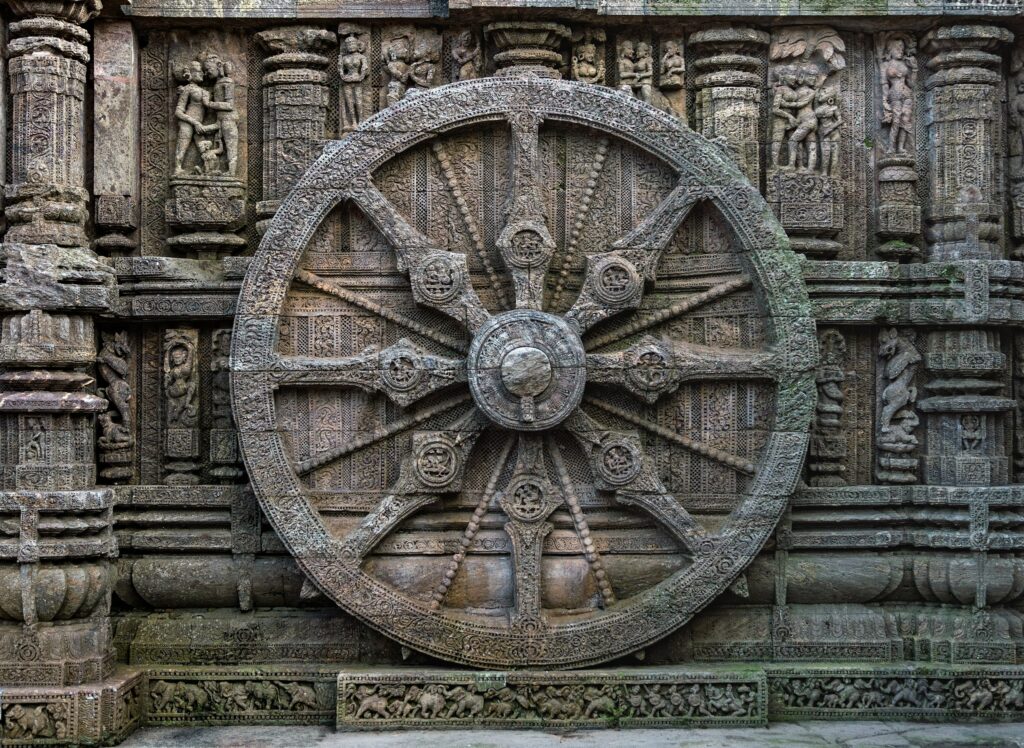
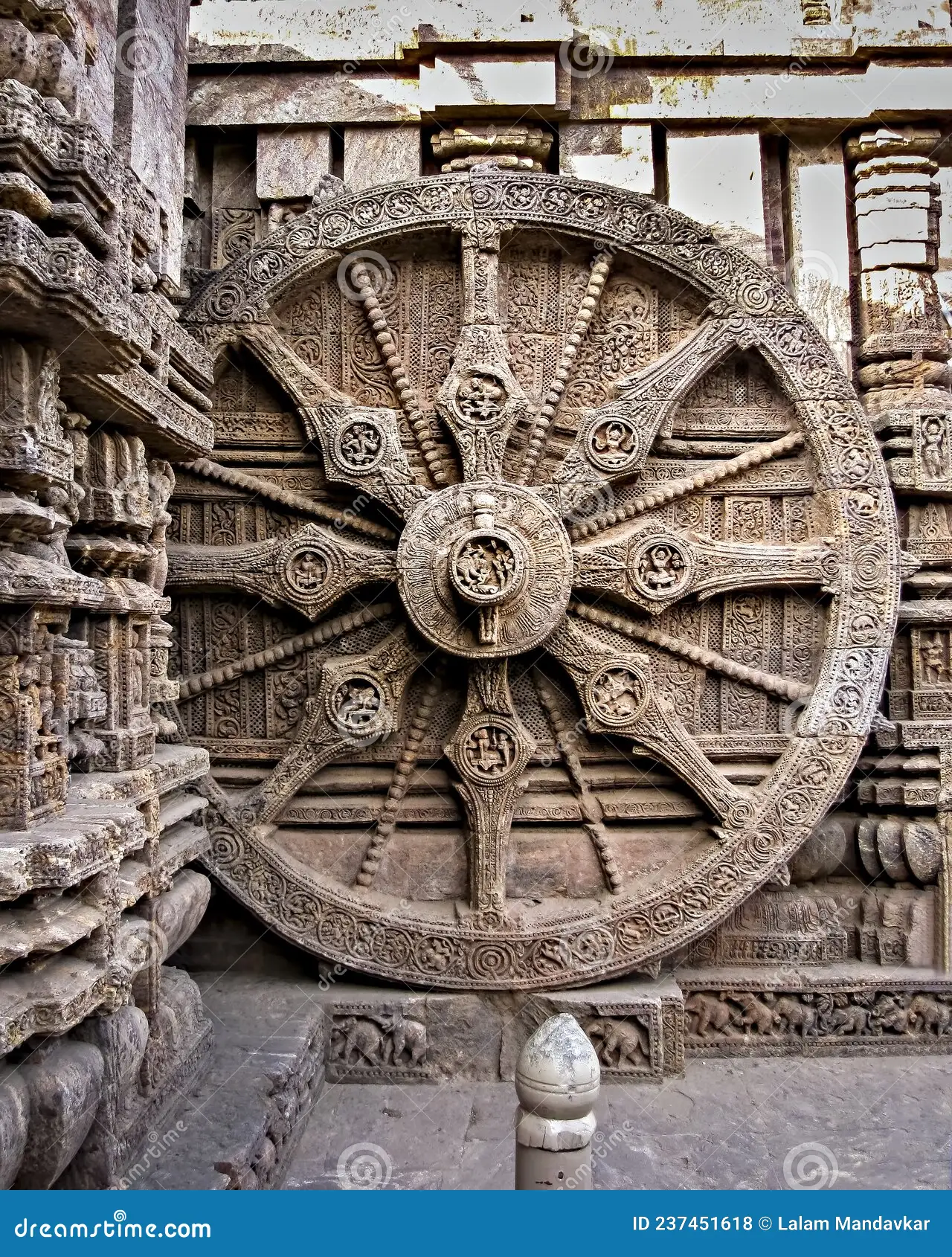
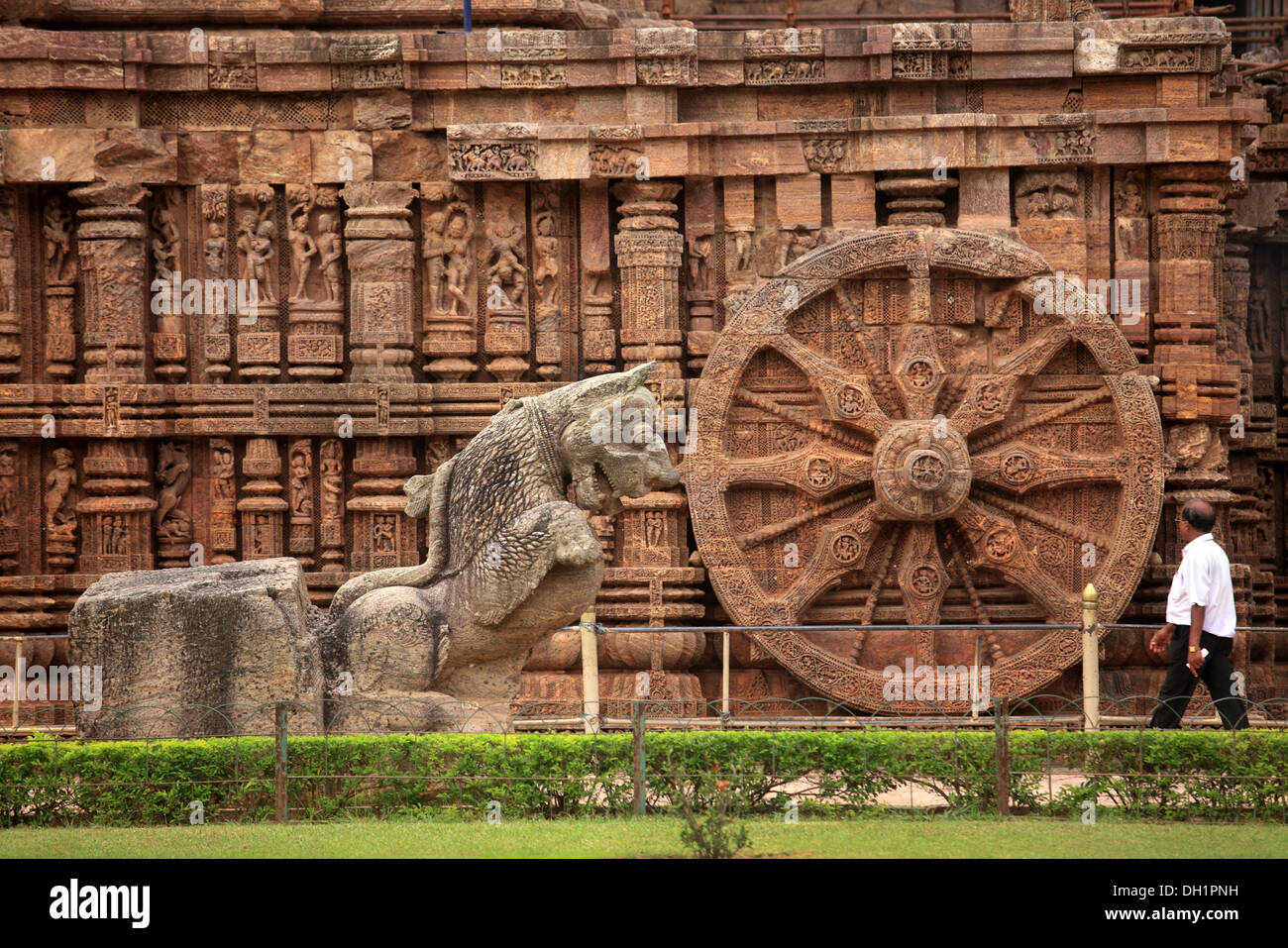
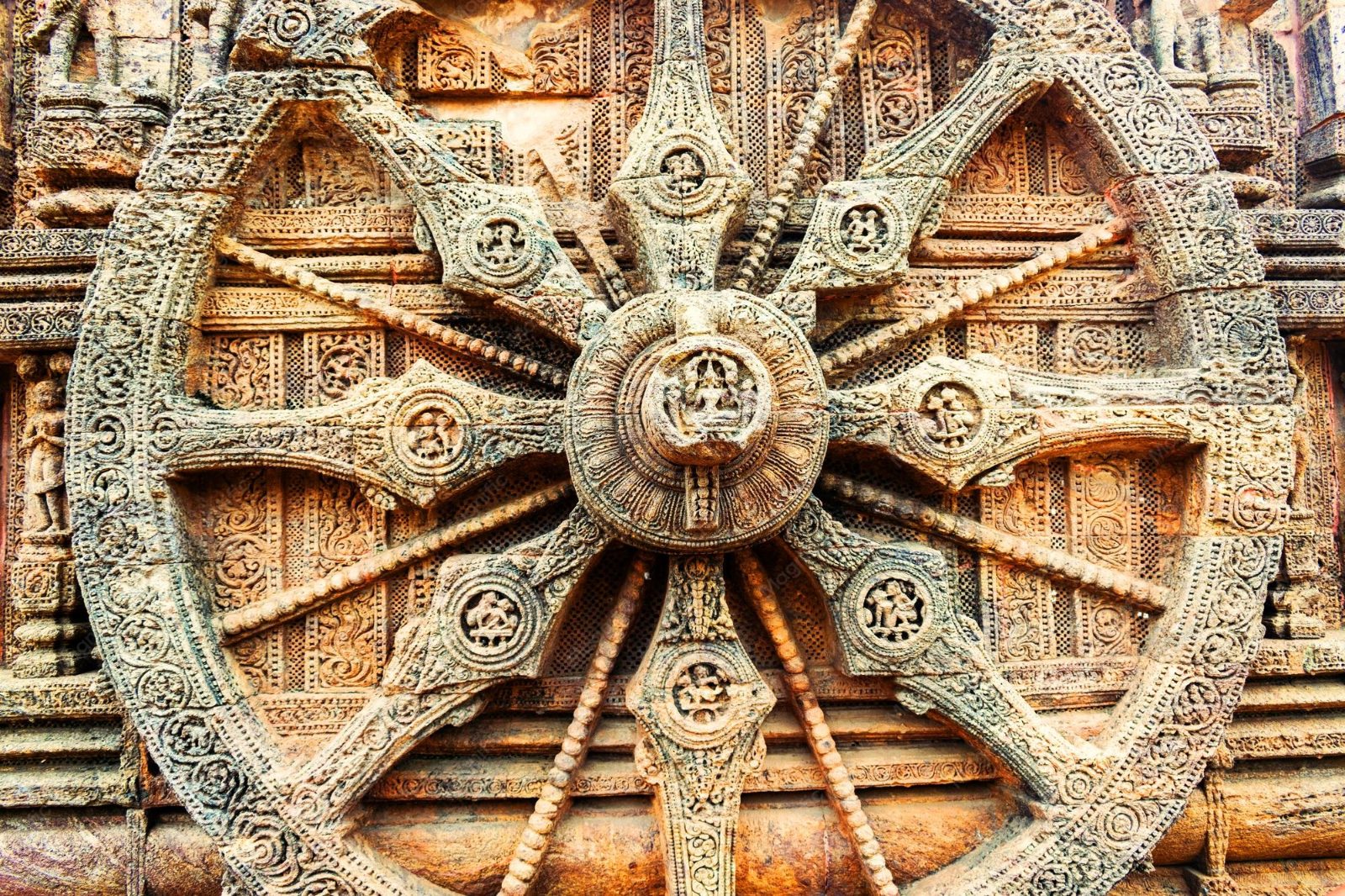
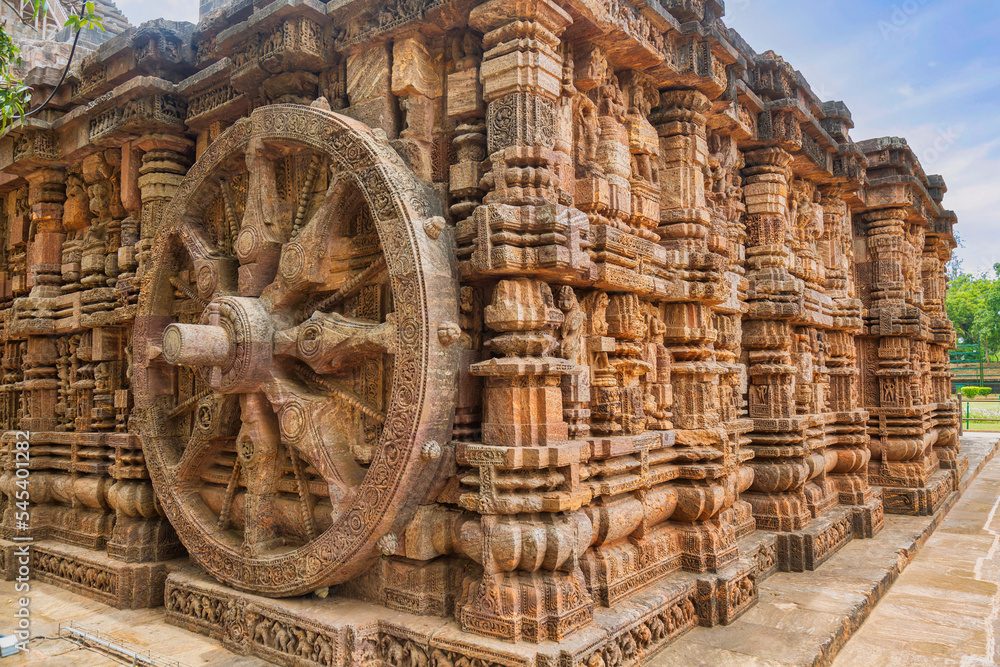
Arranged twelve to a side along the temple's plinth, each stone wheel measures about 3 meters across and is thought to double as a functioning sundial through the position of its spokes. The wheels anchor the building's design as a giant chariot for the sun god Surya.

Nata Mandir Dance Hall

Nata Mandir Dance Hall

Standing apart from the main structure, this roofless dance pavilion rests on sixteen pillars carved with musicians and dancers connected to the historic devadasi tradition. It once hosted ritual performances before the temple's deity.

Gajasimha Sculptures

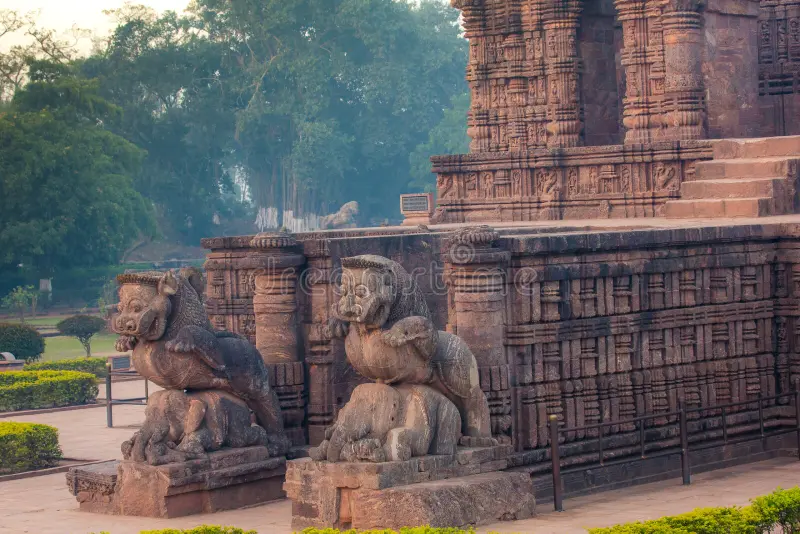
Gajasimha Sculptures

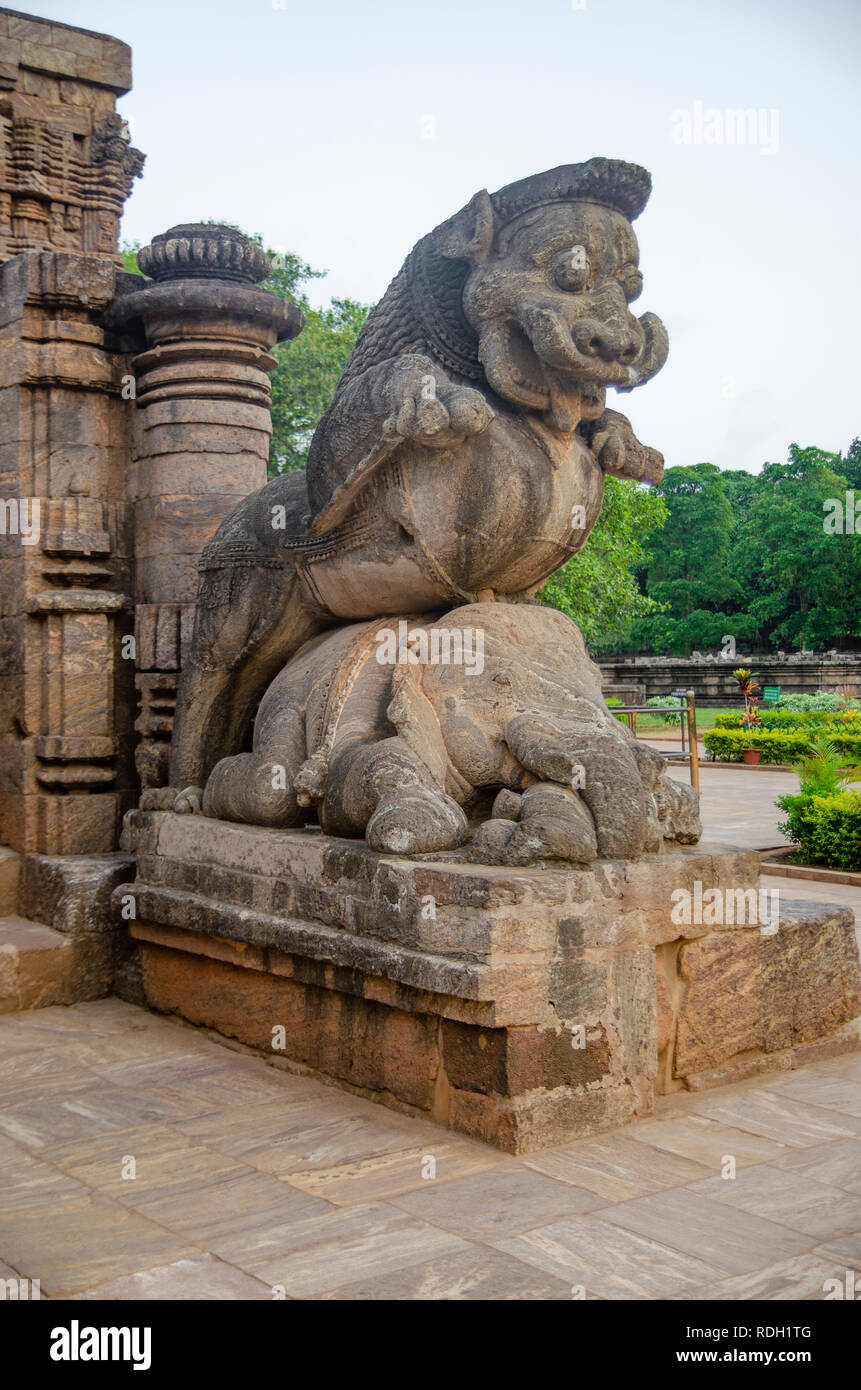
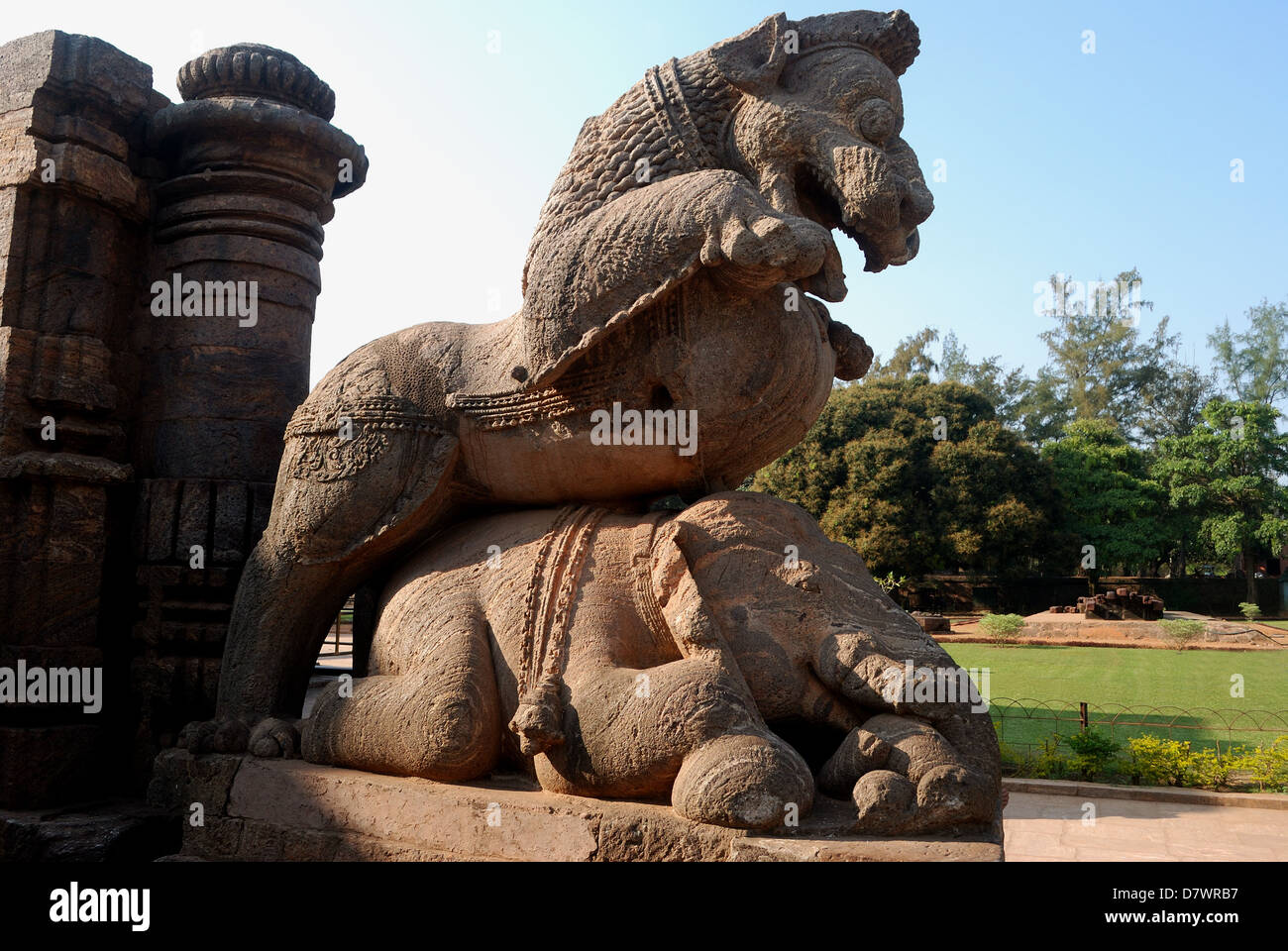
A pair of monumental lion-over-elephant carvings guards the head of the eastern staircase, depicting a lion crushing an elephant that holds a man. The motif is read as a symbol of royal or spiritual dominance at the temple's principal approach.

Seven-Horse Chariot Motif

Seven-Horse Chariot Motif

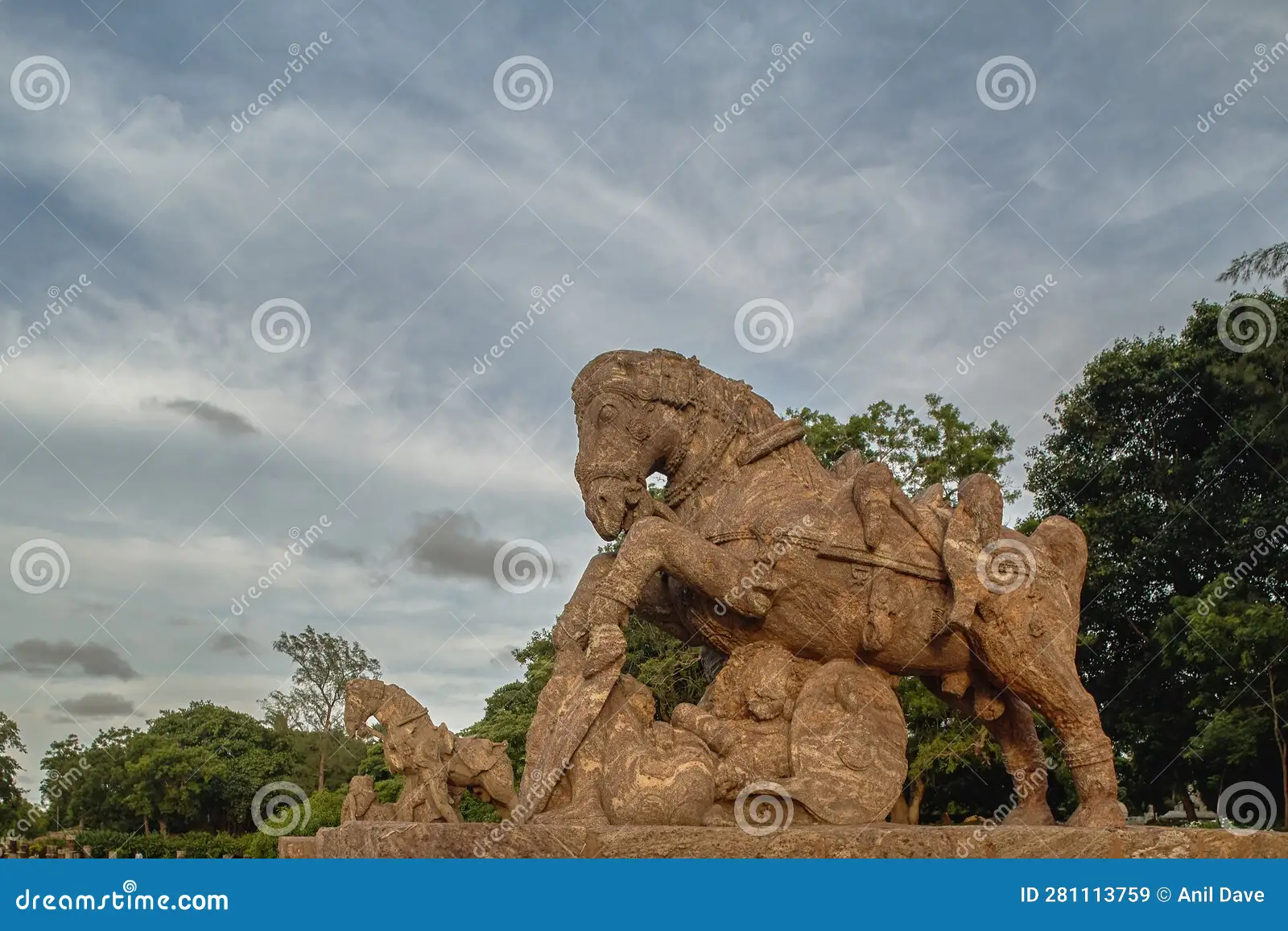
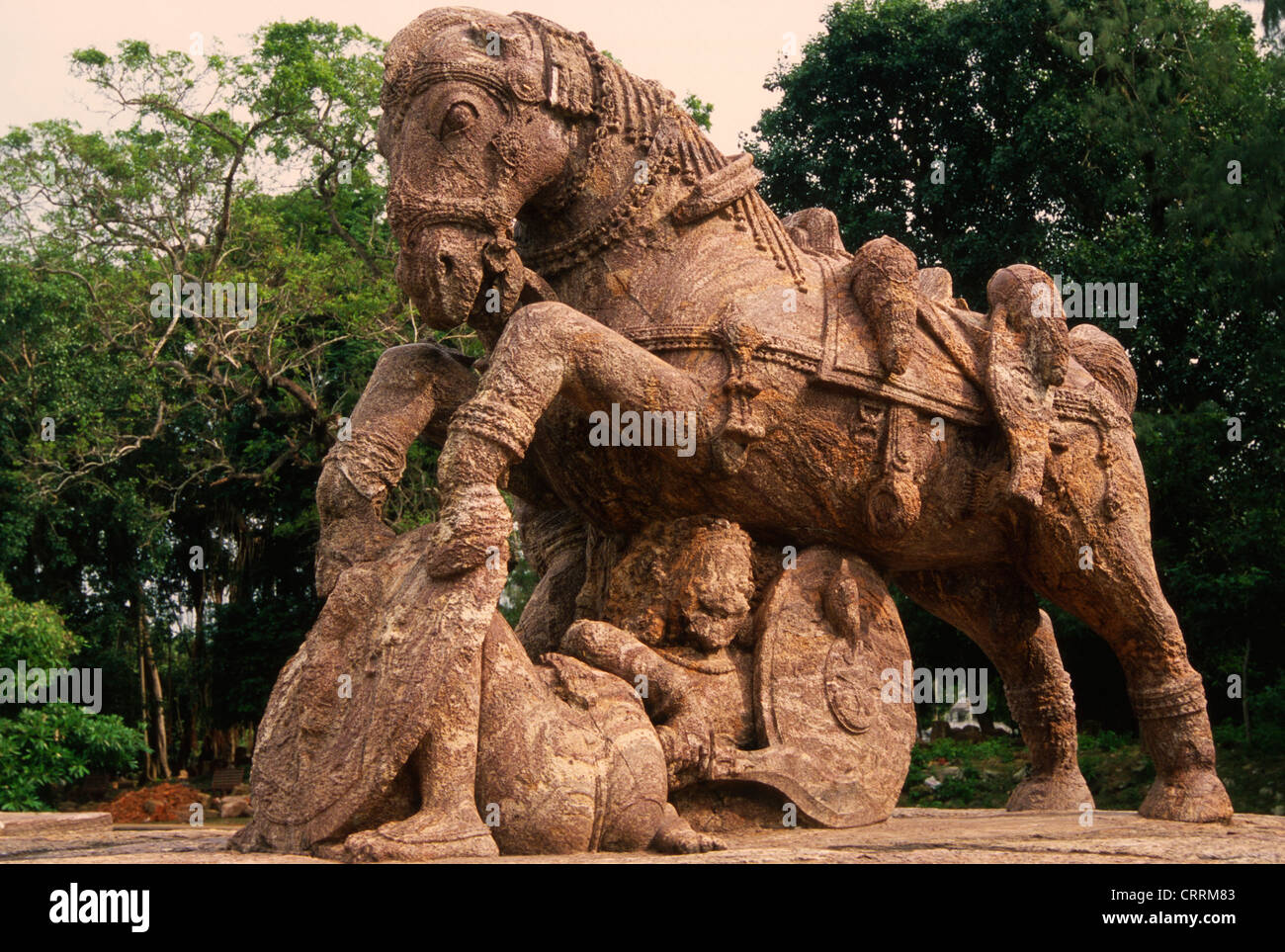
Stone horses straining at their reins flank the temple's grand stairway, representing the seven days of the week that mythically pull the sun god's chariot forward. Only a handful of these horse figures remain intact after centuries of erosion.

ASI Archaeological Museum

ASI Archaeological Museum

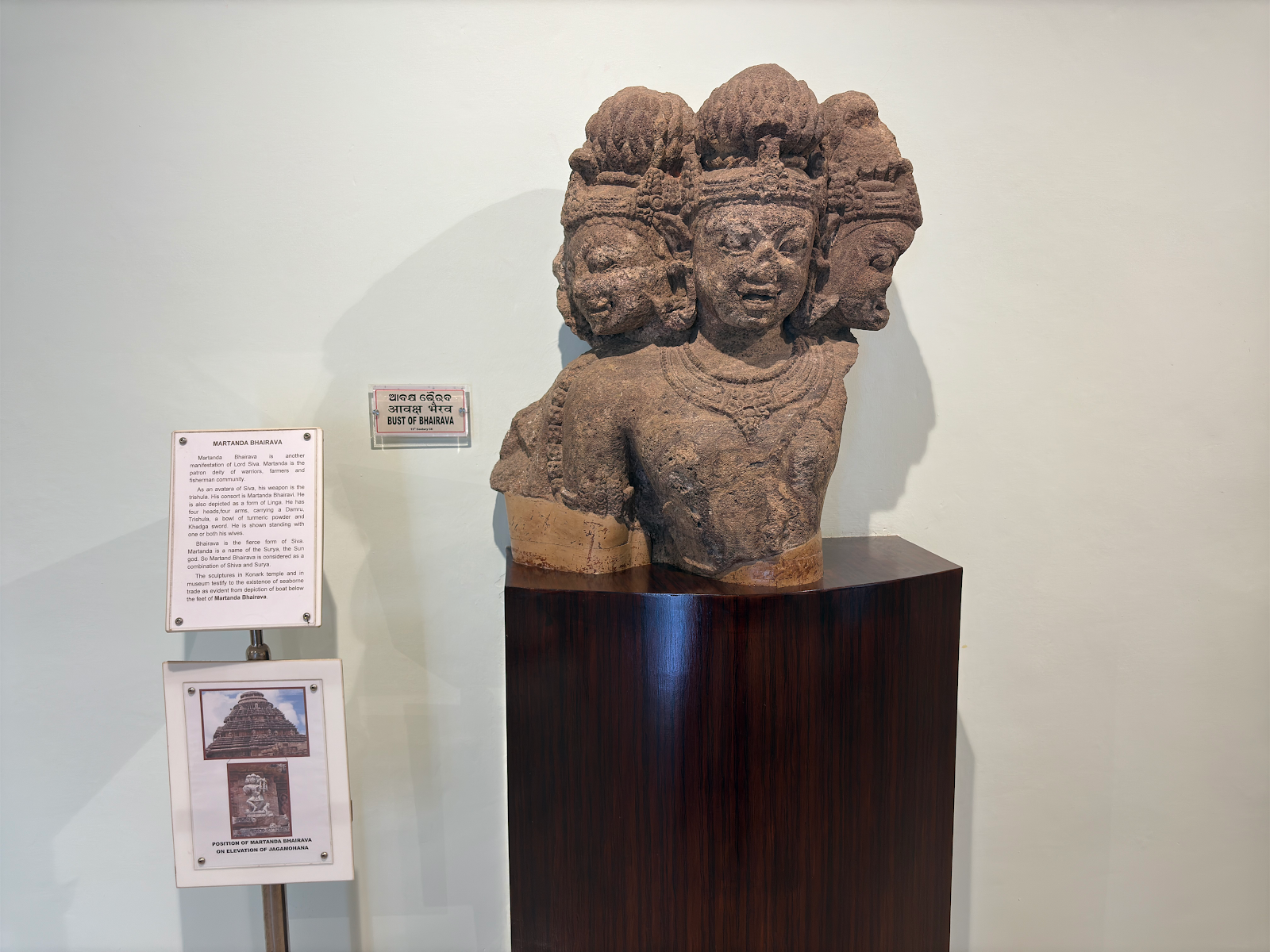
Located a short walk from the main gate, this museum opened in 1968 and displays about 260 sculptures and architectural fragments recovered during 20th-century clearance of sand from the temple grounds. Its four galleries reconstruct pieces too fragile to remain outdoors.

The experience

What visiting Konark Sun Temple is really like

You pass the ticket counter and walk the approach path east, and the porch arrives all at once — a pyramid of stone tiers roughly 30 metres high, blunt where the main tower once stood. You turn right along the southern plinth first, because that is where the wheels begin.

Read more Show less

You stop at the third wheel. It measures close to three metres across, and you trace the eight thick spokes and the eight thin ones between them, then the beaded medallions carved into each. You find the axle. If the light is low, the shadow falls clean across the rim and you can read the time from it. You move on past the elephant frieze, counting the animals, then look up to the southern niche where Surya stands in green chlorite, booted, holding two lotuses.

You climb the terrace steps to the natamandira, standing separate from the main mass, its pillars carved with drummers and dancers. From the top you see the seven horses at the eastern front, rearing against their harness.

You then walk the northern side, quieter, where the war elephant and the giant lion-on-elephant sculptures sit. A Konark Sun Temple Tickets guide will point out details you would otherwise miss. You finish at the ASI museum, twenty minutes on foot from the enclosure gate, where the recovered fragments make the missing tower legible again.

Konark Sun Temple Tickets
Everything You Need to Know

Your complete Konark Sun Temple guide

All the details about your upcoming adventure in one place

Konark Sun Temple Tickets: Chariot of Surya

Konark Sun Temple Tickets grant entry to the 13th-century Surya temple built by King Narasimhadeva I, a UNESCO World Heritage Site shaped as a colossal stone chariot with 24 carved wheels and seven straining horses. Guided Konark Sun Temple Tickets tours bring the jagamohana, the Nata Mandir dance hall, and the Kalinga-style erotic and celestial friezes into focus, with the Konark Archaeological Museum holding recovered sculpture nearby. Popular alternatives include the Konark Sun Temple tour with an ASI-approved guide or a broader Odisha landmarks circuit.

The temple was designed as a vehicle. Twenty-four carved wheels line its plinth, seven stone horses strain at the front, and the whole sanctuary was conceived as the chariot of Surya, the sun god, hauled eastward across the Bay of Bengal shoreline.

Konark Sun Temple Tickets tours introduce visitors to a building that is, structurally, a piece of mythology rendered in khondalite and chlorite.

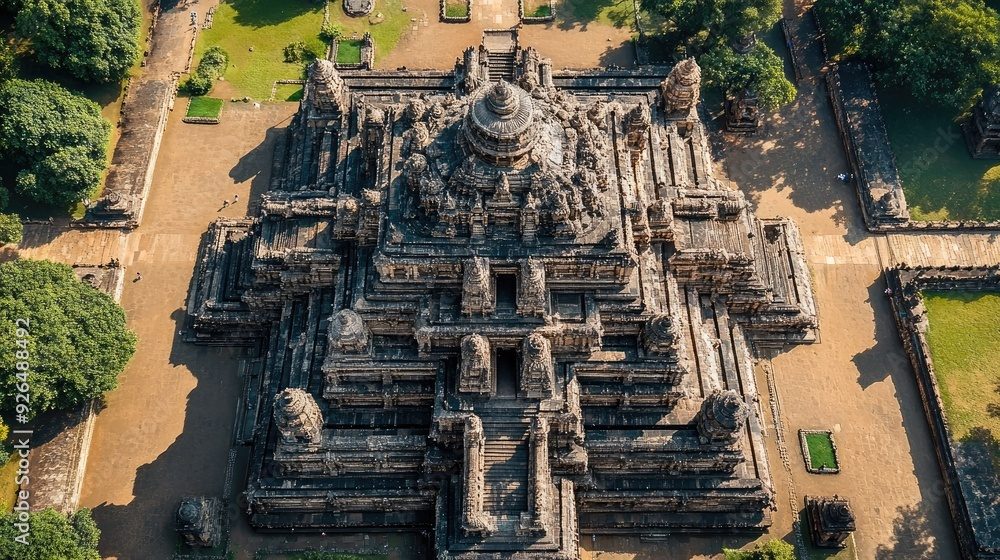
Built in the thirteenth century under the Eastern Ganga dynasty, the complex once carried a towering deul above the surviving jagamohana, the assembly hall that now dominates the site. That tower fell. What remains is the porch, the plinth, and the ruined natamandira, or dance hall, standing apart on its own terrace. UNESCO inscribed the monument in 1984, and the Archaeological Survey of India has administered conservation here for more than a century.

Significance today rests less on scale than on surface. Nearly every horizontal band of the platform carries relief work: processions of elephants, military columns, musicians, courtly couples, hunting scenes, and the celebrated maithuna panels that place Konark within the same sculptural lineage as Khajuraho. The great wheels are functional as well as symbolic — their spokes and axle hubs act as sundials, and guides on a Konark Sun Temple Tickets tour routinely read the hour from a shadow cast across the rim. Odisha landmarks of this period share the pidha and rekha roof forms, but nowhere else is the ornamental programme so complete.

The architecture rewards slow reading. Green chlorite was imported for the doorframes and the colossal Surya images, three of which stand in niches on the southern, western, and northern walls, each cut to catch light at a different hour. The temple's alignment is precise. Its eastern face opens toward the sea, some three kilometres away across sand and casuarina, and mariners once used the darkened mass as a navigational mark, giving rise to the European name Black Pagoda.

A separate museum run by the ASI holds sculpture recovered from the collapse, including fragments of the lost tower. Konark Surya Mandir sits within a wider archaeological landscape that includes the Mayadevi temple and the Vaishnava shrine on the western edge of the enclosure. Konark Sun Temple Tickets tickets grant access to the enclosure and its outlying structures, and the monument stands at Konark, Puri district, Odisha 752111, India, open 06:00–20:00 every day of the week. Official conservation information is published by the Archaeological Survey of India at https://asi.nic.in.
The temple was designed as a vehicle: twenty-four wheels, seven horses, and a sanctuary hauled eastward toward the sea.

Dress code

Modest clothing that covers shoulders and knees is recommended, though the ASI does not enforce a strict dress code since the Sun Temple functions as a monument rather than an active place of worship. Lightweight, breathable fabric is practical given Odisha's coastal humidity, and closed-toe shoes help on the stone steps of the Jagamohana platform.

Bags & security

A metal-detector and bag check operates at the main entrance gate near the ticket counter, and all visitors pass through security before reaching the courtyard. Backpacks and handbags are permitted after inspection, but tripods, drones, and large equipment bags may be asked to be left with the checkpoint staff.

Photography

Personal photography and phone cameras are allowed throughout the open courtyard and around the carved wheels and horses at no extra cost. Tripods and professional filming equipment require separate permission from the ASI site office, and flash photography near the fragile sandstone reliefs is discouraged.

Families & strollers

Children under 5 enter free, and the wide courtyard gives kids room to view the chariot wheels and horse sculptures up close. Strollers manage on the paved sections but not on the temple's stone steps.

Accessibility

The main courtyard and approach to the Jagamohana platform are paved and wheelchair-navigable, but the raised plinth with the famous carved wheels involves stone steps without ramps. Wheelchairs can be arranged informally through the ASI ticket counter, and staff at the gate can advise on the smoothest route for visitors with limited mobility.

Food & drink

Eating and drinking are not permitted inside the monument core, including the platform around the Jagamohana and the carved wheels. Bottled water is allowed and recommended given the coastal heat, but food must be consumed outside the fenced complex near the entrance gate.

Not allowed

× Drones × Tripods without permit × Sharp objects × Large backpacks over cabin-bag size × Food and snacks inside the monument core × Liquor and intoxicants × Loudspeakers × Inflammable items × Chalk, paint or markers × Plastic bags (single-use) × Pets × Weapons of any kind

What to bring

✓ Valid photo ID ✓ Printed or digital e-ticket ✓ Sunscreen and a hat ✓ Bottled water ✓ Comfortable closed-toe shoes ✓ Light cotton clothing ✓ Power bank for phone camera

Opening hours

Mon 06:00 – 20:00

Quietest weekday morning

Tue 06:00 – 20:00
Wed 06:00 – 20:00
Thu 06:00 – 20:00
Fri 06:00 – 20:00

Pre-weekend footfall rises

Sat 06:00 – 20:00

Heaviest domestic crowds

Sun 06:00 – 20:00

Family groups, longer queues

How to get there

At a glance

Hours

Daily 06:00–20:00, every day of the week;location

Opening hours

06:00 – 20:00

Getting there

City-center access via metro and bus

Accessibility

Most experiences are wheelchair-friendly — check individual tours

What to bring

Comfortable shoes, water, phone for mobile voucher

Getting there

Car · 1.5 hours from Bhubaneswar, 45-60 minutes from Puri · Taxi fare roughly 1,500-2,000 INR one-way from Bhubaneswar airport

Self-drive or hired taxi from Bhubaneswar via NH316, a coastal highway route past Pipili's applique craft villages.

Public transport · About 1 hour from Puri · Bus fare typically under 50 INR

OSRTC state buses and private Mo Bus services connect Puri bus stand to Konark roughly every 30-45 minutes.

Taxi · 45 minutes to 1.5 hours depending on origin · Shared taxi fares are lower than private hire

Shared or private taxis and autos wait at Puri railway station and Bhubaneswar airport for direct transfers.

Bike · Around 1 hour from Puri · Daily rental typically a few hundred INR

Rental scooters are available in Puri for the coastal ride to Konark along the Marine Drive road.

Cancellation policy

ASI e-tickets for Konark Sun Temple are date- and time-specific and are generally non-refundable once issued, though most booking platforms allow free rescheduling up to 24 hours before the visit slot. The 600 INR foreign-adult entrance fee is not refunded for no-shows or missed time slots.

Plan your time

How Long to Spend at Konark Sun Temple: A Time-of-Day Guide

Recommended time

2-3 hours

Booking Konark Sun Temple Tickets covers roughly 2-3 hours, enough for the main compound, the chariot wheels, and the carved facades at an unhurried pace. Add 30-45 minutes if a guide is joining you or if you want to linger over the sculpture detail; a quick self-guided pass can be done in under 90 minutes. Ticket lines move fast at the gate itself, so the real time drain is inside the complex, not at entry.

Crowd levels through the day

Dawn (6:00-7:30) Light
Mid-morning (8:00-10:30) Building, tour groups arrive
Midday (11:00-13:30) Peak, harsh flat light
Early afternoon (14:00-16:00) Busy but thinning
Late afternoon (16:30-18:00) Moderate, softer light returns
Evening (18:00-20:00) Quiet, golden light
Plan ahead

Best time to visit Konark Sun Temple

Weather · crowds · average price — dots go green to amber to red as each metric rises.

Oct-Feb

Cool, dry season with daytime temperatures around 20-28°C; this is the peak period for Konark Sun Temple tickets, with the December Konark Dance Festival drawing large crowds.

Insider tips

Helpful tips for visiting Konark Sun Temple

Book online in advance

Purchase Konark Sun Temple tickets through the ASI e-ticketing portal to skip the counter line, especially on weekends when domestic visitor numbers spike.

Where to meet

Konark Sun Temple meeting points

Konark Sun Temple main gate

Konark Sun Temple main gate

Konark, Puri district, Odisha 752111

Primary entrance for ticket check and security screening

Get directions

OTDC Panthanivas parking area

Near the Sun Temple complex, Konark

Common taxi and bus drop-off point close to the ticket counter

Get directions
The story

The History Behind Konark Sun Temple Tickets: A 13th-Century Chariot in Stone

Narasimhadeva I of the Eastern Ganga dynasty ordered the temple raised around 1250 CE. He ruled from 1238 to 1264. Copper-plate grants from his reign record the endowment. The Baya Chakada, a Palm-leaf account of construction, names Sibei Samantaray as chief architect. Twelve hundred artisans are said to have laboured on the chlorite, laterite and khondalite masonry. The plan was theological before it was structural: Surya's chariot, drawn by seven stone horses, mounted on twenty-four carved wheels. Those wheels double as sundials. Visitors who book Konark Sun Temple Tickets still trace the spokes to read the hour. The main deul is thought to have reached roughly 70 metres before its fall. The collapse was gradual and disputed. Abul Fazl's Ain-i-Akbari, completed in 1598, describes the temple as still standing and remarkable. The presiding image was removed to Puri's Jagannath complex in the 1560s amid the campaigns of Kalapahad. By the early seventeenth century worship had ceased. Raja Narasingha Deva of Khurda stripped stone from the site in 1626. The sanctum tower had fallen by the 1830s, leaving only the jagamohana. European mariners named the ruin the Black Pagoda, using its dark bulk as a coastal bearing against the whitewashed temple at Puri. Its loss was noted in Admiralty charts. Conservation began under the colonial administration. In 1901 Lieutenant-Governor John Woodburn ordered the jagamohana filled with sand and sealed, a decision that preserved the hall and closed it permanently. The Archaeological Survey of India assumed custody thereafter and cleared centuries of drifted dune from the courtyard, exposing the Mayadevi shrine and the Nata Mandira. UNESCO inscribed the site as a World Heritage monument in 1984. Odisha heritage tours and Odia visitors alike know it as Konarka Surya Mandira. Those arriving on organised Konark Sun Temple Tickets tours find a monument shaped as much by these interventions as by its builders. Modern Konark Sun Temple Tickets tickets are issued by the ASI, whose ongoing structural monitoring of the sealed hall continues into 2026. A guided Konark Sun Temple Tickets tour is the usual way to read the erotic maithuna friezes, the war elephants, the giraffe panel evidencing trade with Africa, and the surviving Surya images in green chlorite that face the rising light.

c. 1250

Narasimhadeva I of the Eastern Ganga dynasty commissions the temple as Surya's chariot.

1560s

The presiding deity is removed to Puri's Jagannath temple during the campaigns of Kalapahad.

1598

Abul Fazl records the temple in the Ain-i-Akbari as still standing and remarkable.

1626

Raja Narasingha Deva of Khurda removes stone and sculpture from the abandoned site.

17th c.

European mariners chart the darkened ruin as the Black Pagoda, a navigational bearing on the Odisha coast.

1830s

The main sanctuary tower has collapsed, leaving the jagamohana as the principal standing structure.

1901

Lieutenant-Governor John Woodburn orders the jagamohana filled with sand and sealed to prevent its fall.

1984

UNESCO inscribes the monument on the World Heritage List under Archaeological Survey of India custody.

Photo spots

Best Photo Spots for Your Konark Sun Temple Visit

Nata Mandir Platform

Nata Mandir Platform

Best light · Early morning

Stand at the elevated dance pavilion east of the main sanctuary for a wide frontal shot of the pillared hall against the sky, with carved friezes visible along its base. The raised platform gives an unobstructed angle rarely blocked by crowds.

Chariot Wheel Reliefs, North Face

Chariot Wheel Reliefs, North Face

Best light · Sunrise

Twenty-four stone wheels ring the temple base, each nearly twelve feet across with spokes carved as sundials. The north-side wheels near the plinth catch low-angle light best, and buying Konark Sun Temple Tickets early lets you reach this row before tour groups cluster around it.

East Facade Steps

East Facade Steps

Best light · Before 08:00

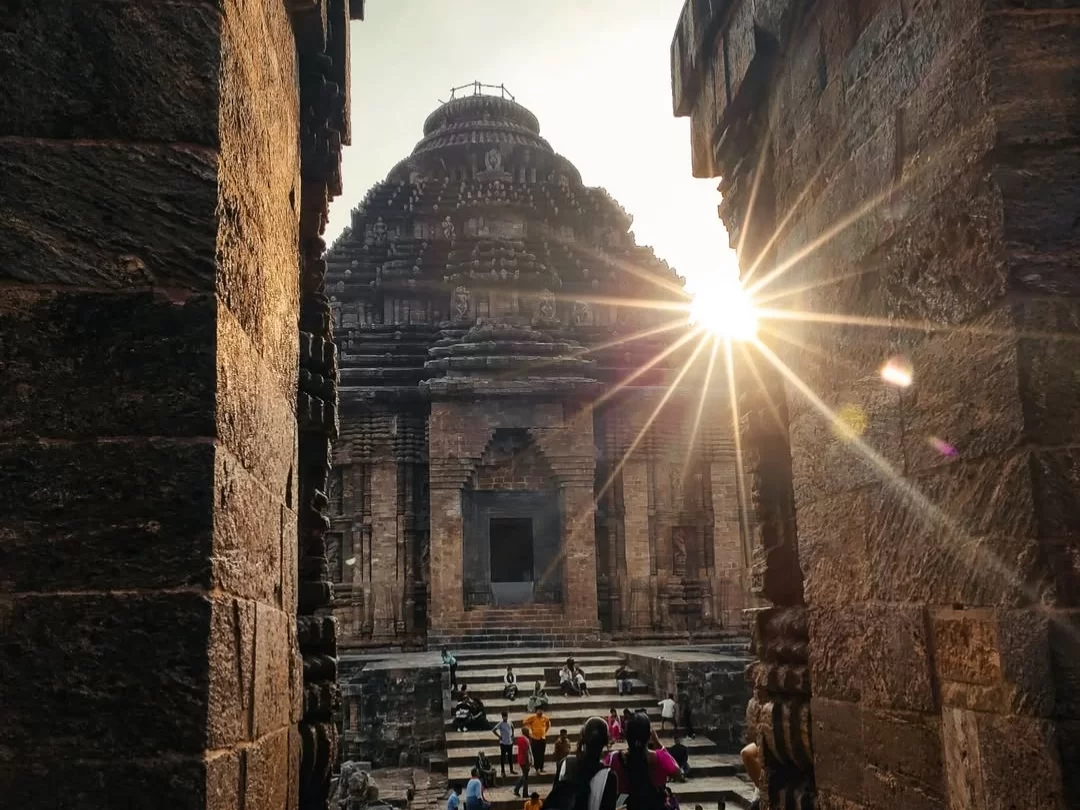
The main east-facing entrance stairway, flanked by the paired lion-and-elephant sculptures, is the classic full-height view of the temple's sandstone tower and porch. Shoot from the base of the steps looking up for scale, or back up onto the lawn for the complete silhouette.

Lion and Elephant Sculptures

Lion and Elephant Sculptures

Best light · Morning light

Twin statues of a lion crushing an elephant sit on plinths flanking the temple's northern approach, a classic detail shot for close-up carving texture. Stand at ground level and angle upward to keep the sky as backdrop.

Southwest Wheel and Horse Panel

Southwest Wheel and Horse Panel

Best light · Late afternoon

Near the southwest corner, one of the chariot's seven carved horses stands beside a wheel panel, giving a combined shot of the temple's chariot symbolism in a single frame. Fewer visitors pass this side, making it easier to compose without people in view.

Gallery

Moments from Konark Sun Temple

With kids

Visiting Konark Sun Temple Tickets with Family: What to Expect

Visiting Konark Sun Temple Tickets with kids means slow, shaded exploration rather than a brisk walk, since the stone chariot wheels and courtyard are best enjoyed at a child's pace. Most families pair the ruins with a beach afternoon, turning ancient Kalinga architecture into a full day out rather than a rushed stop.

Strollers

The stepped, uneven stone pathways around the Jagamohana make wheeled strollers impractical; a soft carrier or letting toddlers walk short stretches works better, with washrooms and basic seating near the entrance for breaks.

Best ages

Children aged 6 and up tend to engage more with the wheel-and-horse chariot design and sundial carvings, while under-15s already get fee concessions, making this a natural stop on an Odisha landmarks tour with school-age kids.

Erotic carvings

Some panels depict amorous figures typical of Kalinga temple art; if children ask, a simple line about ancient artists carving scenes of daily life and celebration usually satisfies curiosity without dwelling on it.

Pacing

Heat builds fast after mid-morning on the open stone plaza, so plan 60-90 minutes of walking with water breaks in shaded corners rather than one continuous loop.

Beach break

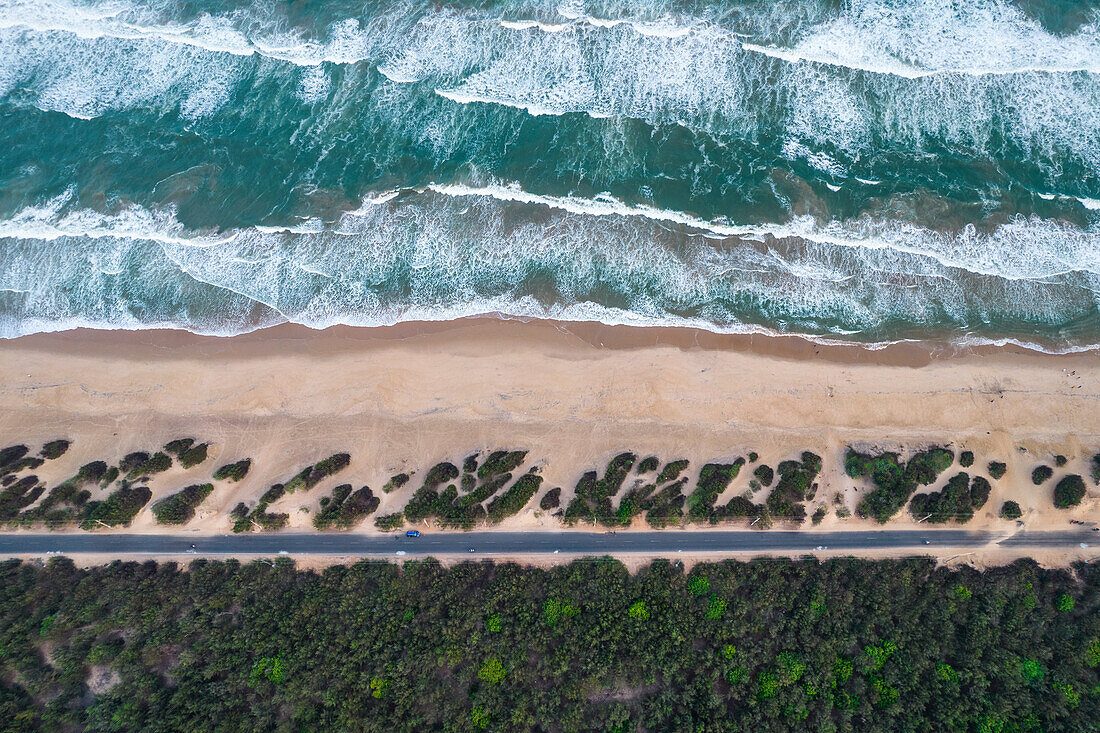
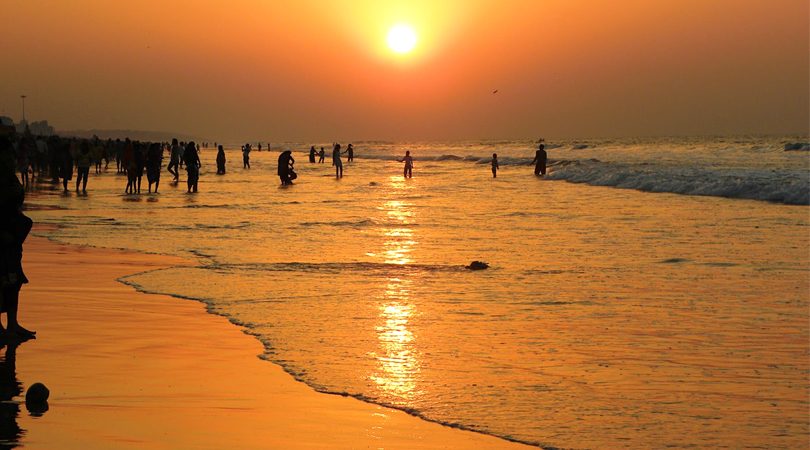
Chandrabhaga Beach sits a short drive away and makes an easy reward stop for tired legs, letting kids run and cool off after the temple visit.

Facilities

Wheelchair-style assistance and accessible washrooms exist near the main gate, but there's no dedicated baby-change room, so carry your own changing mat for infants.

Food & drink

Where to Eat Near Konark Sun Temple

Dining right at the monument is limited to a couple of government-run canteens, so most visitors booking Konark Sun Temple Tickets plan meals around the market road outside the complex or push on to Puri, 35 km away, for a wider spread of options.

Geetanjali Restaurant

OTDC canteen, on-site

Government-run restaurant just outside the main gate, useful for thalis, rice-and-dal combos, and cold drinks right after the visit; fills up around lunchtime with bus groups.

Kamat Restaurant

Roadside restaurant, IOCL compound

Sits directly across from the entrance approach road; a clean, no-fuss stop for tawa roti, veg fried rice, or kadai chicken between temple and museum visits.

OTDC Yatri Nivas canteen

Canteen-style, on-site

Attached to the OTDC Yatri Nivas guesthouse on Konark-Puri Road, this no-frills canteen serves simple veg and non-veg meals, handy for a quick breakfast before Konark Sun Temple Tickets tours begin at sunrise.

Nature Camp Restaurant

₹-₹₹

Casual dining, 5 min walk

A short walk from the temple, popular for a relaxed lunch after the morning's Konark Sun Temple Tickets tour, with simple Indian and Chinese dishes.

Puri town restaurants

₹-₹₹₹

Wider selection, 35 km away

Puri offers seafood shacks, beachfront cafés, and Odia thali houses; a practical choice for dinner if your Konark Sun Temple Tickets tour is combined with a Puri stay.

Customer Reviews

What travelers say about Konark Sun Temple

Real experiences from real travelers

4.5
Based on 2,400 reviews
1 ★ 840
2 ★ 610
3 ★ 1450
4 ★ 4200
5 ★ 16800
A
Anika R.
India · 2026-06-14

Wheels worth the walk

We booked our Konark Sun Temple Tickets the night before and reached by mid-morning, when the stone was already hot underfoot. The carved chariot wheels are far larger in person than photos suggest, and the spoke medallions still hold crisp detail after eight centuries. Sea wind from Chandrabhaga carries right across the lawn.

T
Thomas B.
Germany · 2026-05-02

Khondalite in full sun

The scale of the jagamohana caught me off guard, especially standing at the base looking up the tiered roof. Our guide pointed out the erotic friezes and the dancer panels on the Nata Mandira, which are easy to walk past unnoticed. A Konark Odisha temple tour is worth it just for the context on the Ganga dynasty builders.

M
Mei L.
Japan · 2026-04-19

Stone that keeps light

Golden light late in the day turns the khondalite a deep honey colour that no photograph reproduces well. The war horse sculptures on the southern side are the piece I keep thinking about. Bring water, there is very little shade on the lawn.

C
Carlos M.
Spain · 2026-03-27

Ruined but powerful

The main sanctum collapsed centuries ago, so what you see is essentially the porch, which surprised some people in our group. Still, the surviving surface carving is dense and remarkable, and the UNESCO heritage signage explains the loss clearly. Konark Sun Temple Tickets tickets were quick to collect at the gate.

P
Priya N.
United States · 2026-02-08

Sun chariot in stone

Standing at the eastern approach you understand the whole design at once, a chariot with twenty-four wheels and seven horses hauling the sun god across the sky. The sandstone Surya figures in the niches have weathered but the faces are intact. One of the Odisha landmarks I would return to.

R
Rafael S.
Brazil · 2026-01-16

Better than expected

Cool January air made walking the perimeter comfortable, and the crowd thinned considerably away from the main façade. Detail on the plinth friezes, elephants, processions, musicians, goes on for metres without repeating. A skip-the-line Konark temple entry saved us a queue at the counter.

H
Hannah W.
United Kingdom · 2025-11-23

Carvings everywhere

Every surface of this place is worked, from the wheel hubs to the tiny figures tucked under the cornices. The archaeological museum nearby fills in what the collapsed tower would have looked like. Konark Sun Temple Tickets tours make more sense than wandering alone if you want the iconography explained.

I
Ingrid K.
Netherlands · 2025-09-30

Salt air and sandstone

You can smell the Bay of Bengal from the lawn, and the salt has clearly worked on the exposed stone over the centuries. The Nata Mandira platform gives a good vantage of the main structure. Konark Sun Temple Tickets were straightforward to arrange in advance.

J
Julien P.
France · 2025-07-11

Hot but rewarding

July heat was intense by ten in the morning and the open ground offers no relief, so plan accordingly. The chariot wheel carvings and the horse sculptures held our attention despite the temperature. A Konark Sun Temple Tickets tour with a knowledgeable guide made the visit far richer.

D
Daniel O.
Australia · 2025-04-05

Kalinga architecture at its peak

The proportions of the surviving porch are extraordinary and the Kalinga-style roof tiers read clearly from a distance. Look for the smaller Surya panels on the north face, they are the finest carving on site. Easily the highlight of a week spent around Puri and Bhubaneswar.

FAQ

Konark Sun Temple — frequently asked questions

Everything you need to know for your journey

Around the corner

More to see near Konark Sun Temple

Chandrabhaga Beach

Chandrabhaga Beach

10 minutes by taxi

landmark

A Blue Flag-certified beach roughly 3 km east of the temple, where the Chandrabhaga River meets the Bay of Bengal. It hosts the annual Magha Saptami ritual bathing and the International Sand Art Festival.

ASI Archaeological Museum

ASI Archaeological Museum

5 minutes on foot

museum

A 1968-established museum near the temple gate displaying roughly 260 sculptures and architectural fragments recovered during site excavation. Its four galleries give context to the carvings seen on the monument itself.

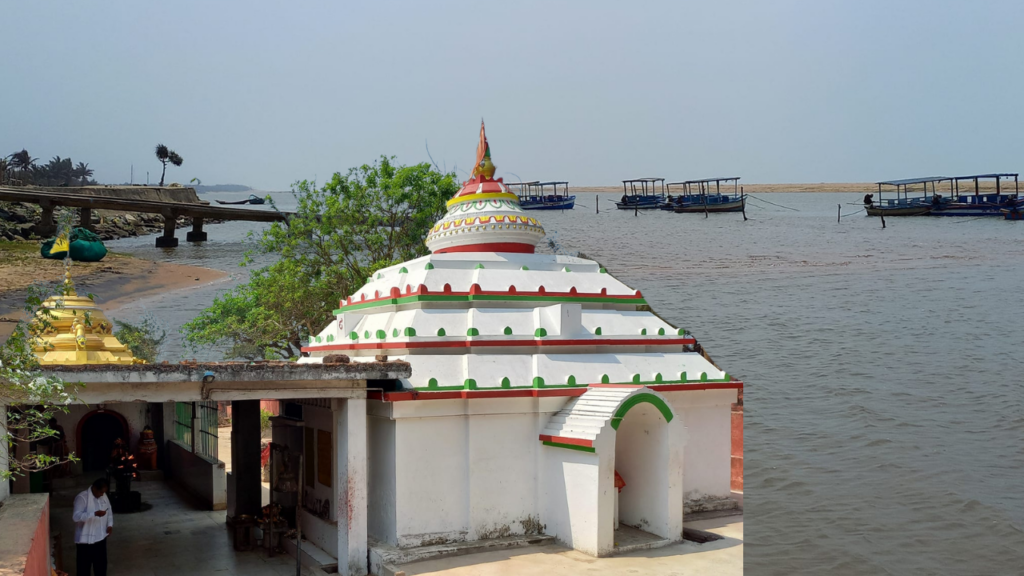
Ramachandi Temple

Ramachandi Temple

15 minutes by taxi

landmark

A riverside shrine dedicated to the goddess Ramachandi on the banks of the Kusabhadra River. It offers a quieter, less-visited contrast to the main temple complex.

Konark Beach

Konark Beach

10 minutes by taxi

landmark

Also known as Konark Beach, this stretch of coastline sits along the same shoreline as Chandrabhaga and is popular for sunrise walks.

Where to stay

Where to stay near Konark Sun Temple

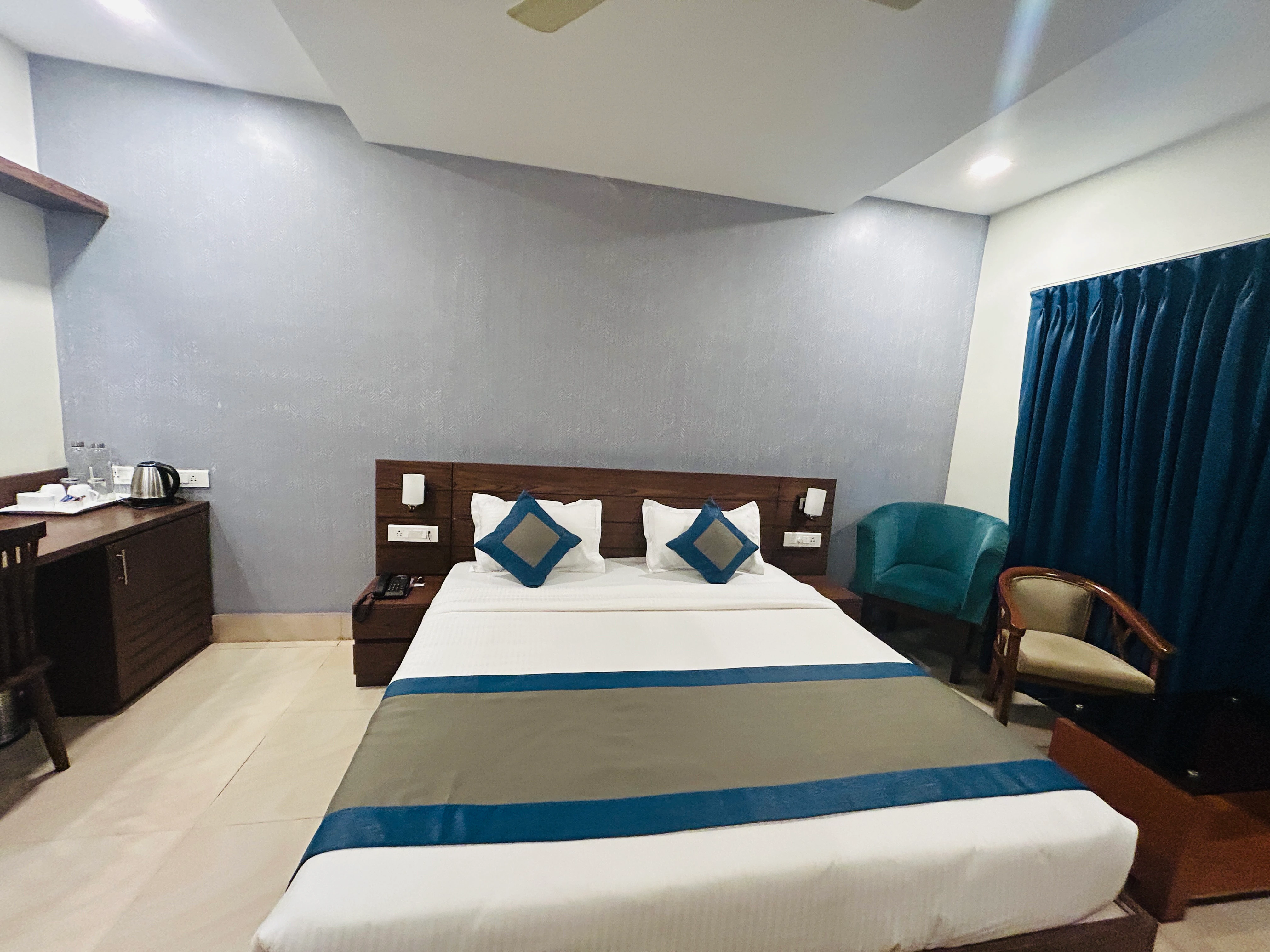
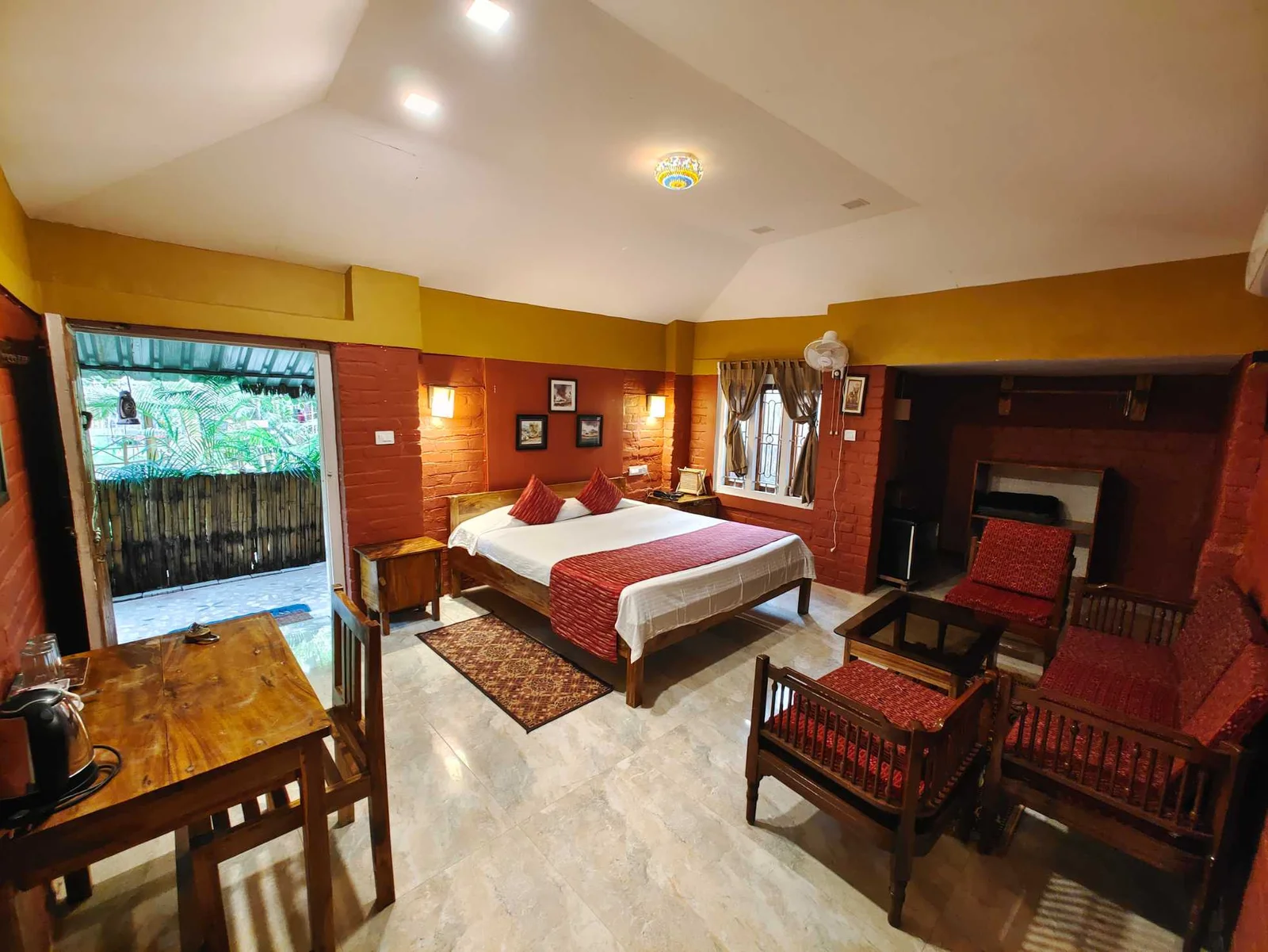
Panthanivas Konark

Panthanivas Konark

5 minutes on foot

mid-range

A state-run OTDC hotel directly facing the Sun Temple complex, with an on-site restaurant and simple rooms geared toward day-trippers.

Yatri Nivas Konark

8 minutes on foot

budget

A modest state tourism guesthouse within walking distance of the temple, popular with pilgrims and budget travelers.

WildDunes Eco Resort

WildDunes Eco Resort

15 minutes by taxi

boutique

An eco-styled resort near Konark blending sustainable design with proximity to the temple and Chandrabhaga Beach.

Puri hotel district

35-40 minutes by taxi

district

Puri offers a much wider range of hotels from budget lodges to beachfront resorts for travelers basing themselves outside Konark.

Ready for Adventure?

Join thousands of happy travelers who have discovered this incredible experience

Book Your Experience Now